
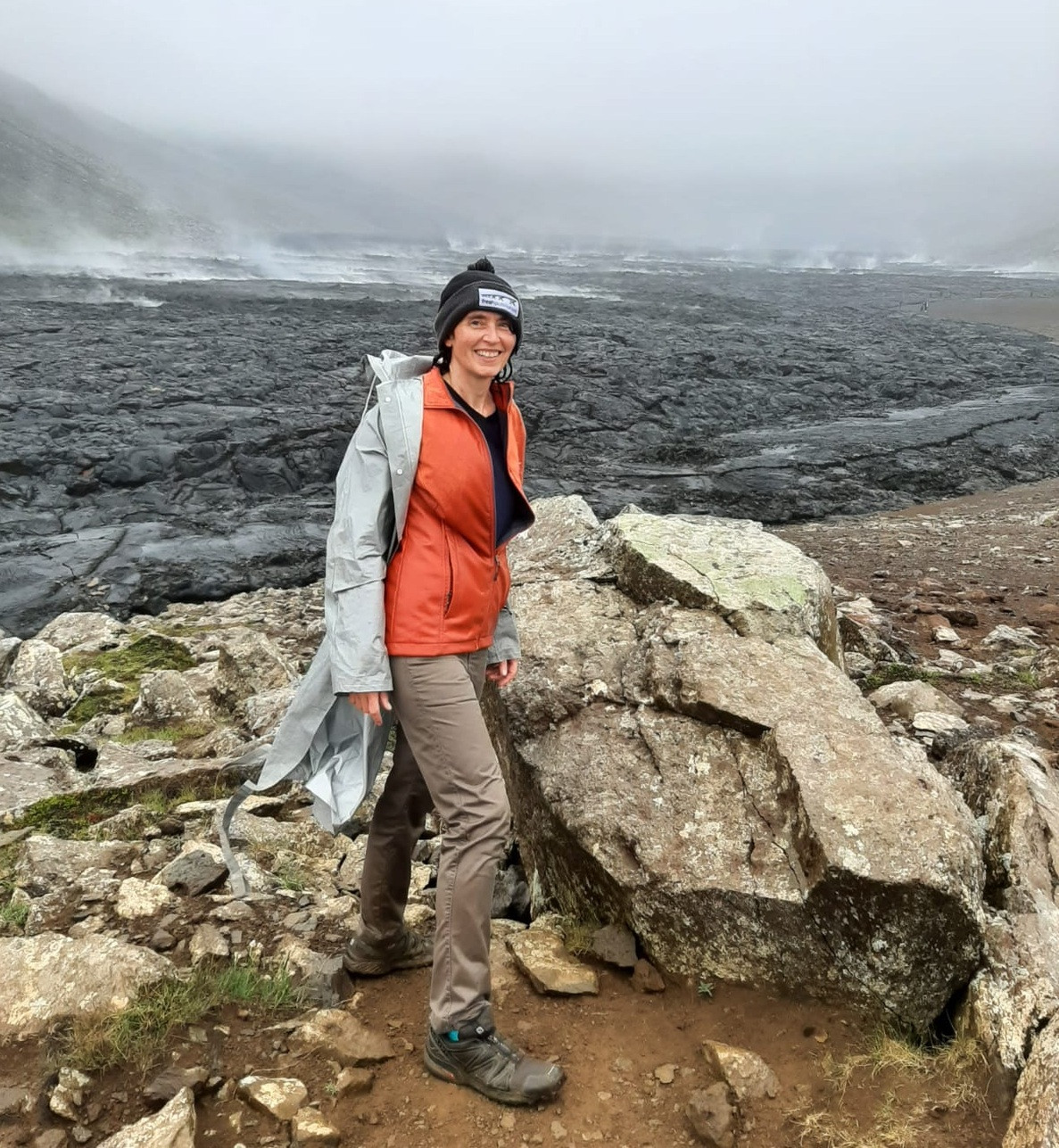
Carolize Jansen is a BOT SOC Gauteng branch member and an avid plant enthusiast.
For Carolize, the veld first revealed itself more gently, during childhood afternoons spent lying in the tall grasses of a Bronkhorstspruit smallholding, surrounded by the rhythms of nature.
She grew up immersed in the veld, where the family smallholding was equal parts home and garden.
Life persists in even the smallest fragments of veld. Once in a while we’re reminded of this in fleeting, quiet moments that are easily missed. When Carolize Jansen is lucky enough to experience such a moment, it stays with her.
Yet, she has learned that talking about the veld can be a fluister or a boom. She references a late 1920s magazine called Veld, which promoted “agricultural dynamite” – a reminder that landscapes have long been places of both appreciation and aggressive intervention.
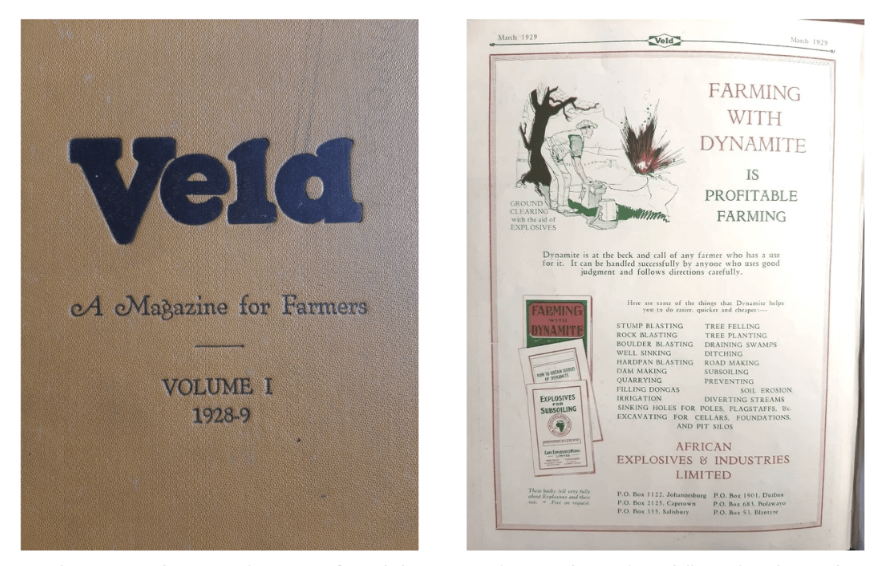
The March 1929 issue of Veld magazine advertised “agricultural dynamite” – a reminder that, historically, the veld could quite literally be met with a boom.
The grasses were never mowed – a detail she remembers with particular fondness. Armed with a blanket, she would settle into the tall grass and watch butterflies drifting and dancing around her.
That appreciation for small, intimate encounters with nature has stayed with her. Even a recent run-in with some stressed mice in her kitchen turned into an unexpected veld moment. Knowing their weakness – peanut butter – Carolize was able to catch and release them at Kruin Park nature reserve, an undeveloped quartzite-shale ridge in Pretoria.
Kruin Park holds many small discoveries. It is the only place where Carolize has encountered the Bushveld bolete mushroom (Phlebopus sudanicus), a striking species with a large brown cap.
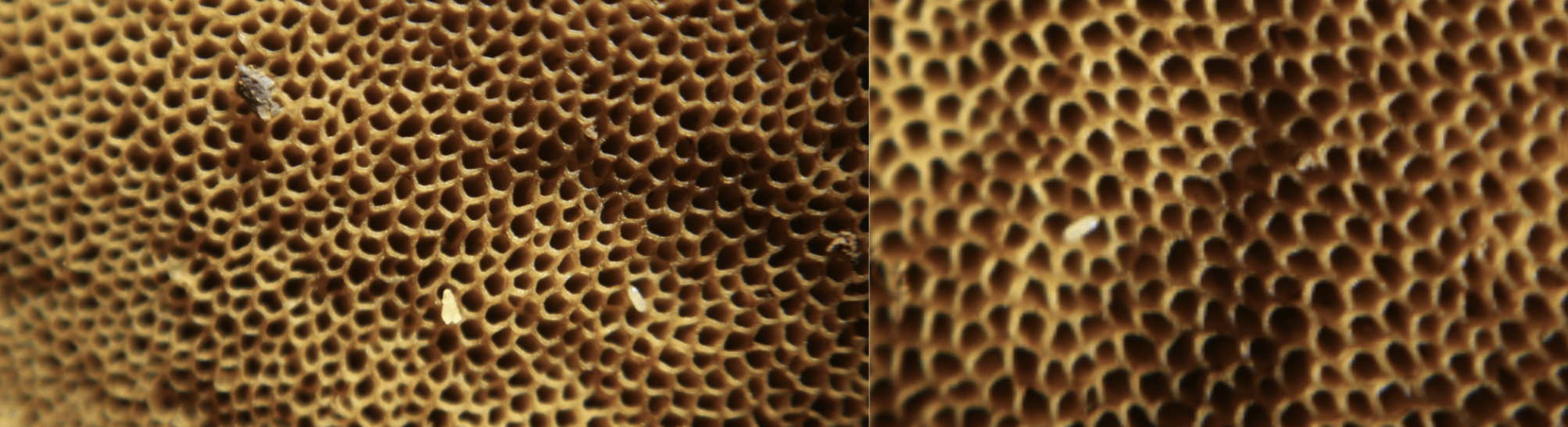
The only Bushveld bolete mushroom (Phlebopus sudanicus) that Carolize has encountered, in the Kruin Park nature reserve.
The ridge also brings to life many of the shrubs so beautifully illustrated by Joan van Gogh in Trees and Shrubs of the Witwatersrand and in the Highveld edition of Sappi’s tree spotting guides. Among the familiar but often overlooked species she notices are Osyris lanceolata, Afrocanthium gilfillanii and Euclea crispa. On the slopes facing the road to Midrand and Johannesburg – where so little natural veld remains – stands of Brachylaena rotundata and Combretum molle still grow, accompanied by the delicate blooms of Protea afra.
Just outside the gates of Kruin Park, enclosed by a small fence, lies a seemingly ordinary patch of low grass. At first glance it appears unimpressive, but once the eye adjusts, a lively scene is revealed. The tall stalks of a Dipcadi bulb rise above the grass, with curious bees drawn to the seed pods. The bees bustle among the grasses with their full pollen baskets, visiting species that somehow grow in this unassuming patch but not within the actual reserve on the other side of the fence.
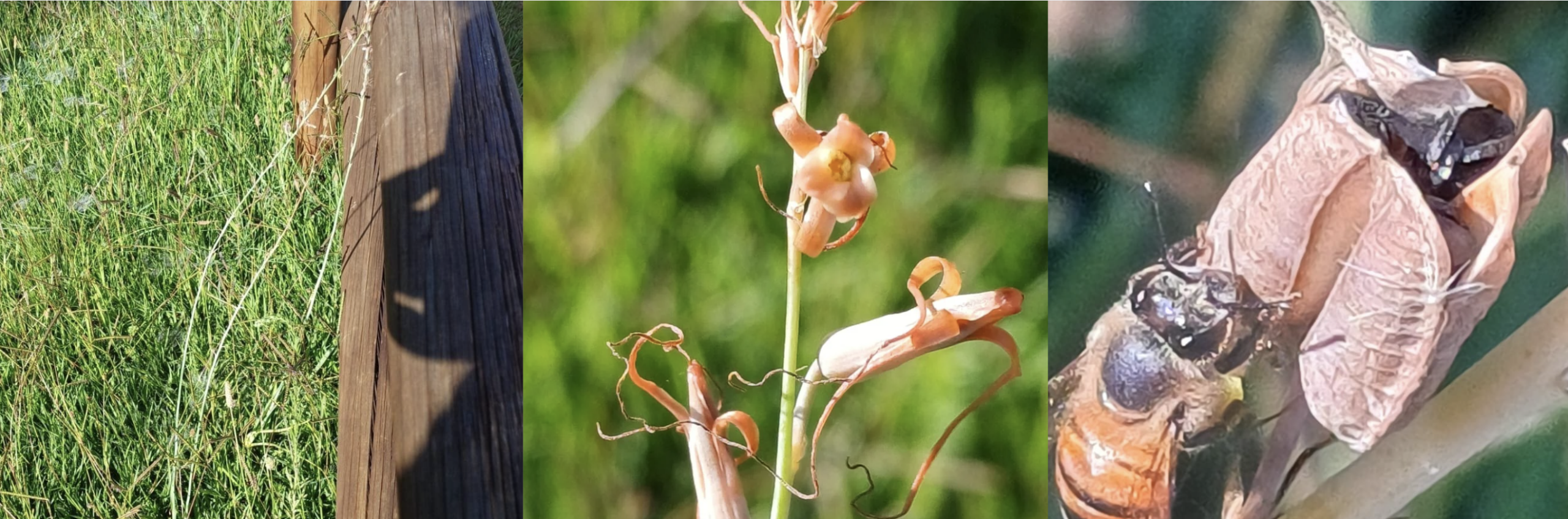
A Dipcadi bulb rising above the grass in the nondescript area just outside Kruin Park which has since been mowed, leaving the spot lifeless.
A close-up photo of the Dipcadi bulb, just outside the entrance to Kruin Park nature reserve.
A bee on a Dipcadi bulb, seemingly drawn to its seed pod.
An ever-growing life list
Carolize loves these kinds of discoveries, and her camera roll is full of species that have captured her attention. One plant she had long hoped to find is Hebenstretia dura, which she eventually came across at a nursery in Middelburg in the Eastern Cape – a small but satisfying purchase of a plant she had admired for years.
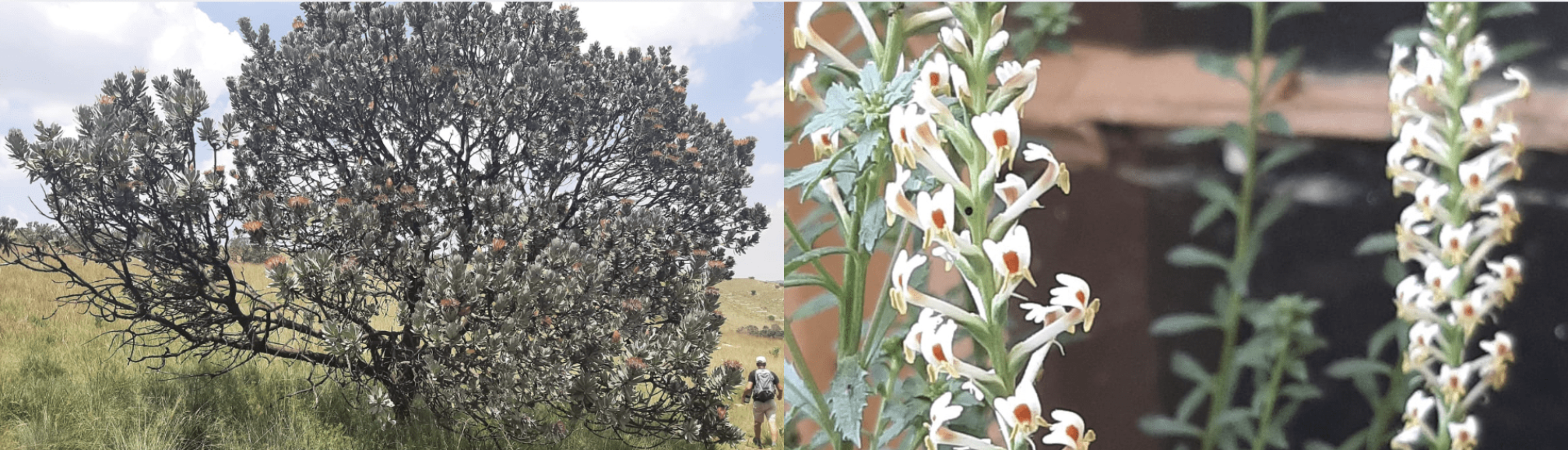
Protea roupelliae which Carolize photographed in a far-flung corner of Walter Sisulu national botanical garden.
Hebenstretia dura, a plant Carolize finally found at a nursery in Middelburg, Eastern Cape.
She also enjoys visiting the far reaches of the Walter Sisulu national botanical garden. It was during one of these visits that she photographed the striking Protea roupelliae while observing a monthly butterfly survey led by Jeremy Dobson of the Lepidopterists’ Society of Africa (LepSoc Africa).
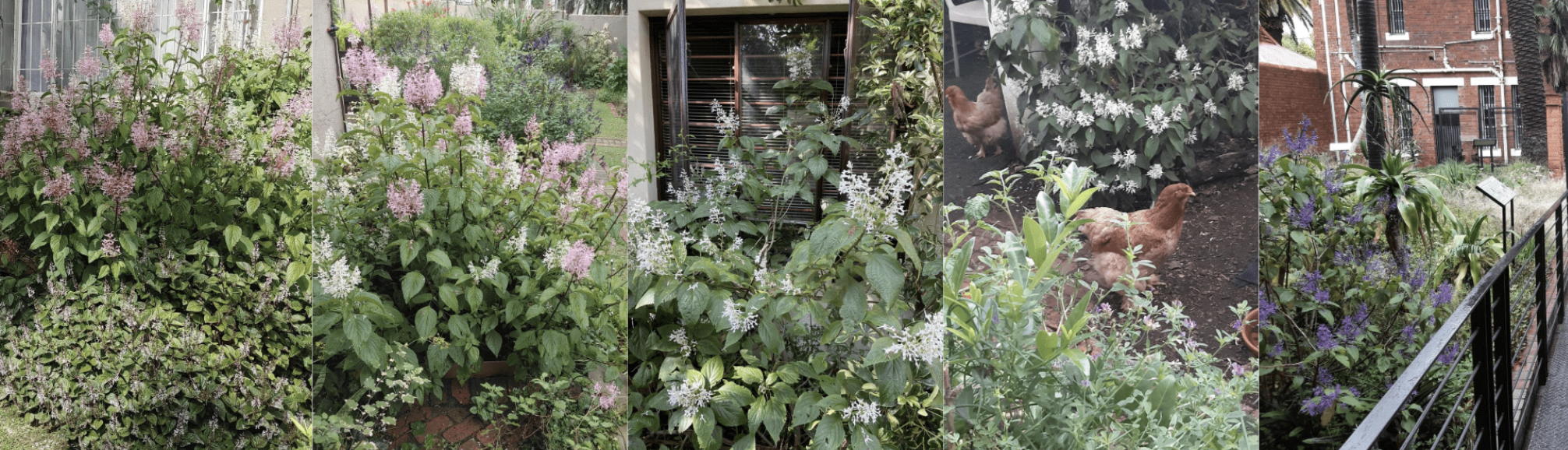
The showy Plectranthus ecklonii has flowered extensively following the high rainfall on the Highveld this past summer. Photos by (from left) Gawie Swart (2), Hermien van Staden and Carolize Jansen (2).
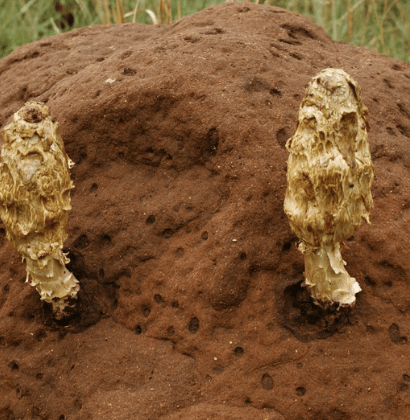
Perdekopswam (Podaxis pistillaris) emerging from a termite mound in the Bronkhorstspruit veld.
Carolize has been particularly excited about Plectranthus ecklonii this past year, which shone on the Highveld this summer, relishing the high rainfall.
Her recent reading has also led her to think more deeply about fungi. After dipping into Rupert Sheldrake’s Entangled Life, she has found herself paying closer attention to mushrooms in the veld. Among them is the familiar Perdekopswam (Podaxis pistillaris), which she photographed emerging from a termite mound in the Bronkhorstspruit veld.
‘Grow, don’t mow’
Since Carolize’s discovery, the patch of grass buzzing with activity outside Kruin Park has been cut back to ground level – a reminder of how easily these small refuges can disappear. She has noticed similar patterns elsewhere. At her children’s school, wild species of Albuca and Asparagus occasionally appear along the fence where little else grows, only to be removed once discovered. Each summer the cycle repeats, until eventually the plants struggle to return.
Experiences like these have made Carolize reflect on how urban landscapes are often managed with neatness and uniformity in mind. While mowing and clearing can offer a quick visual sense of order, she wonders whether small pockets of indigenous vegetation could sometimes be left to flourish, offering refuge to plants and the insects that depend on them.
There are encouraging examples elsewhere. During visits to London, Carolize noticed several boroughs where urban green spaces are managed with a lighter touch, allowing plants – and their invertebrate companions – to thrive. As “grow, don’t mow” ideas begin to gain traction in South Africa, Carolize hopes that more of these encounters with nature might become part of everyday urban life. A patch of grass beside a fence, a volunteer bulb along a boundary, or a ridge left undeveloped: all of these scenes can hold remarkable biodiversity for those willing to pause and look closely. In landscapes that are increasingly managed and controlled, these small discoveries serve as reminders that the veld is still there – just waiting to be noticed.
Share your whispers from the veld with us!
The Veld Fluister series is a space to share and celebrate these stories. If you’ve had a meaningful experience in nature or undertaken a project that highlights the beauty of our indigenous plants, we’d love to feature it. Reach out to veldandflora@botanicalsociety.org.za to share your story and inspire others to listen to the whispers of the veld.


JOIN BOTSOC
JOIN NOW


Hours
Tuesdays from 08h00 to 16h00. Closed from Wednesday to Monday and public holidays.
Contact Us
We are experiencing intermittent faults with our landlines. If you can't get through on our landline +27 (0) 21 797 2090 , please phone or send a message to our alternate WhatsApp number: +27 (0) 65 922 6163.
Notice
From 1 March 2026, our office located inside Kirstenbosch National Botanical Garden (through Gate 2) will be open to assist members on Tuesdays only (08:00 – 16:00).
0 Comments