

The good, the bad and the truth of gardening in the Kogelberg Biosphere
Gardening in the Kogelberg Biosphere isn’t just about pretty flowers and neat paths – it’s part adventure and part love affair with fynbos. As GALIA MANICOM AND TENEAL BARNARD explain, here plants have their own ideas about where and how to grow. That’s why Kogelberg Garden Circle gardeners quickly learn that nature is the real head gardener here. Looking after this special patch of the planet means relearning most of what you know about gardening and discovering that conservation can be as joyful as it is rewarding.
PHOTOS BY GALIA MANICOM
In the villages of Rooiels, Betty’s Bay and Pringle Bay, where mountains meet the sea, gardening takes on a whole new meaning. These coastal communities lie within the Kogelberg Biosphere – a UNESCO-declared site celebrated for its extraordinary biodiversity.
This region forms the heart of the Cape Floristic Region – one of the world’s most remarkable biodiversity hotspots. Gardening here isn’t just about creating beautiful spaces, but it comes with the added responsibility of caring for a unique and fragile natural world, where plants and animals have adapted over millions of years to very specialised growing conditions.

The KGC members provide support where possible, even helping to weed in the Harold Porter national botanical garden, with instruction from the garden’s senior horticulturalist Ebraime Hull.
For members of the Kogelberg Garden Circle (KGC), the work is equal parts stewardship, frustration and delight, redefining what it means to garden with nature. This is where the Kogelberg Garden Circle has found its purpose. An “arm” of the Botanical Society of South Africa BOT SOC Kogelberg Branch, the circle is made up of both branch members and enthusiastic local gardeners. Galia explains that this group is not a formal garden club, but a circle, where she best describes members as “going round and round in circles, we’re not quite sure what we’re doing, but we garden anyway”.


Members also partake in informative workshops to keep gardeners and fynbos lovers in the know about the local flora, including smoking of fynbos seeds, using iNaturalist, pruning proteas and identification of plants.
Guiding gardening decisions
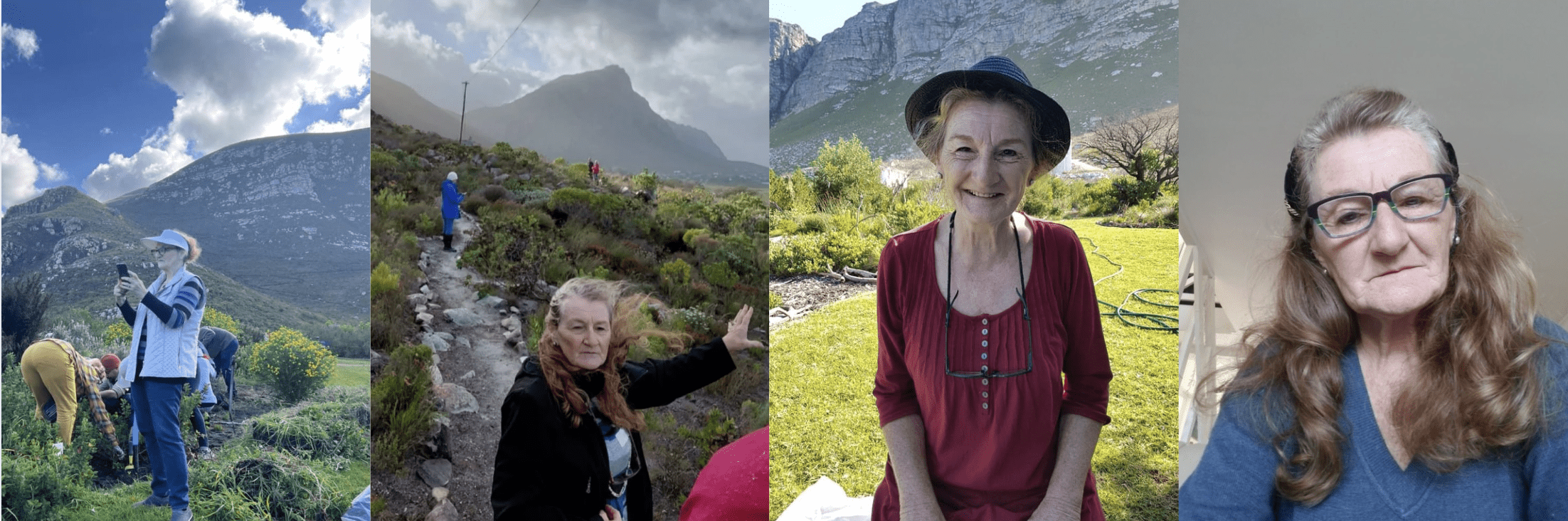
Galia Manicom started a gardening series in the local Overstrand Herald newspaper, called Snippets for an amateur fynbos gardener, to share insights into gardening in the fynbos.
Earlier this year, the KGC launched a gardening series titled Snippets for an amateur fynbos gardener in the local community newspaper, the Overstrand Herald. The idea was sparked when Galia was approached to share insights on gardening with newcomers to the Kogelberg Biosphere. It quickly became clear that there was – and still is – a real need to bridge the gap between conservation knowledge and the everyday choices people make in their fynbos gardens.
The aim of the newspaper articles is threefold: to share practical advice on gardening in this unique environment, to cultivate a sense of custodianship for the fynbos that literally grows on people’s doorsteps and to reassure newcomers that gardening in the Kogelberg is not more difficult, just different.
Tempting topics for the green fingered
Topics have included the dangers of invasive alien plants; the distinctions between alien, indigenous and endemic plants; where to source indigenous plants; water-wise gardening; the quirks of microclimates and acidic soils; the challenges of gardening in extremely windy conditions; and the importance of succession planting when starting afresh in a new garden.
Through the series, the articles have highlighted how invasive alien vegetation not only threatens biodiversity, but also increases the risk of intense wildfires, which in turn bring devastating economic and ecological losses. They have touched on how local soils differ dramatically between mountain slopes, wetlands and dunes, and why fertilisers should be avoided in favour of mulching or seaweed-based feeds. The articles have also pointed out why choosing smaller, hardier trees is often a wiser option than buying larger, mature specimens raised in “intensive care” conditions. When these nurtured plants are suddenly thrown out into the wild, to face drying summer winds, gale-force winter gusts and poor, acidic soils, it’s a bit like sending them straight from a luxury spa into a howling southeaster!

It started with a simple article – and has now grown to a bi-weekly gardening series in the local community newspaper, the Overstrand Herald.
Gardening with nature
Underlying all this practical advice is a simple message: gardening here is about working with nature. Too often new property owners strip their plots bare, only to find themselves visiting Harold Porter national botanical garden to admire the very plants they have destroyed. Others pave entire gardens out of fear of fire, unaware that well-planned fynbos gardens can be both fire-wise and water-wise. Here, estate agents’ mantra of “location, location, location” must be joined by “information, information, information”, because gardening choices have lasting consequences for one of the most diverse floras on Earth.
Living in a biosphere also means considering the fauna. Small choices make a big difference – like leaving a part of the garden as a wildlife corridor between fences so animals can move freely; reducing outdoor lighting to protect nocturnal species; or using a wetland plot to incorporate a pond for aquatic species. In the Kogelberg, a garden is never only about plants – it is about being part of an interconnected system.
Rescuing fynbos is ‘addictive’
The circle also runs “Fight for Fynbos”, a rescue initiative that allows KGC members to salvage fynbos from plots, before construction begins. About half of Galia’s garden is made up of rescued plants – proof that, despite the persistent myth, fynbos can be transplanted.
The real challenge lies in getting advance notice before excavators arrive, a task complicated by privacy laws, building timelines and miscommunication. But when it works, Galia says it’s highly addictive: “Once you rescue one plant, you want to rescue another, and another – especially knowing that anything left behind will forever be lost under concrete.”

Come rain or shine the Kogelberg Garden Circle hosts monthly outings to private gardens in different stages of development, focusing on the importance of conserving fynbos in their gardens.
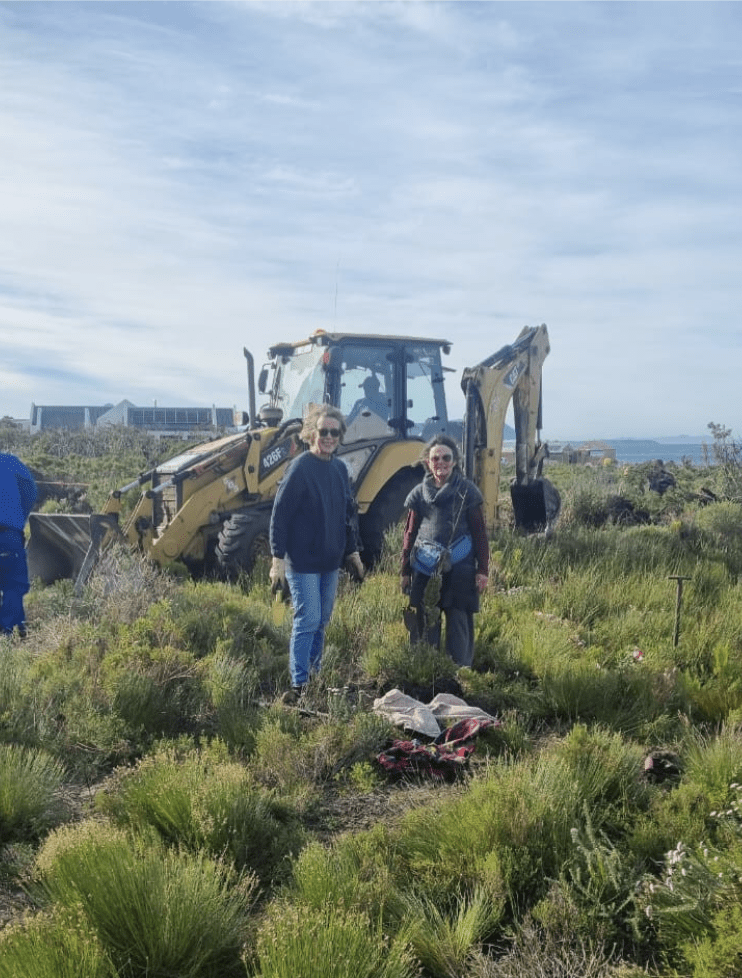
Through the KGC’s rescue initiative “Fight for Fynbos”, owners give members permission to rescue fynbos plants from plots, before construction begins, often from under the nose of the excavator.
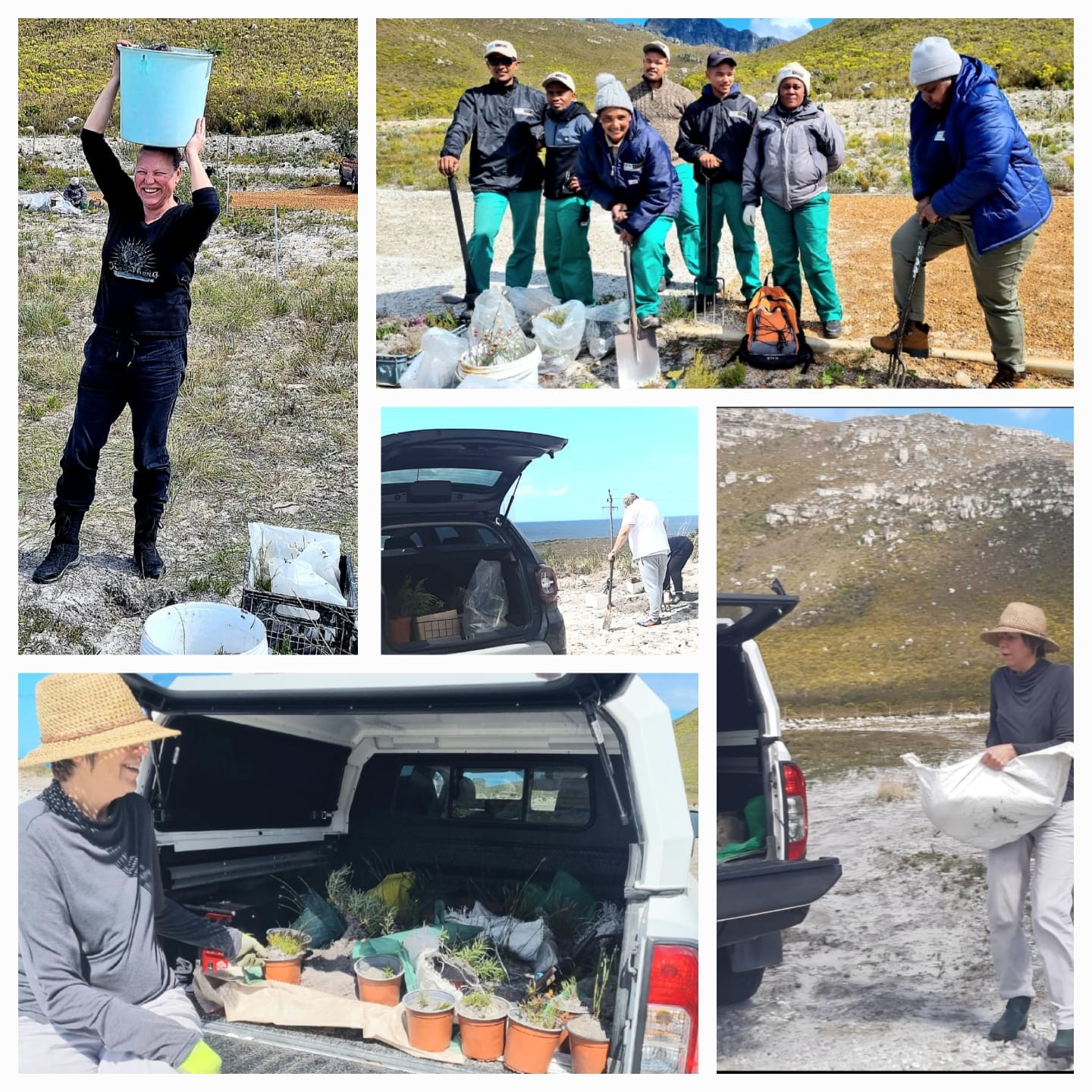
Once you’ve rescued one plant, you want to rescue another, and another – especially knowing that anything left behind will forever be lost under concrete.
The community response to the articles has been heartening. New members have joined the garden circle, and feedback suggests the information has simplified gardening, encouraging them to learn more about – and embrace – the hundreds of species of fynbos. In a place where every garden is a small piece of biosphere, this kind of shared knowledge is vital.
For members of the KGC, gardening is both challenging and rewarding. But it is also a responsibility, an act of conservation, and a way of connecting with our unique natural heritage. Each plot is, in essence, a mini-Harold Porter garden, and every gardener a custodian.
Galia Manicom is a branch member of the BOT SOC Kogelberg Branch and member of the Kogelberg Garden Circle.
Teneal Barnard is communications coordinator of the BOT SOC SA team.
4 Comments
Submit a Comment
JOIN BOTSOC
Know, grow, protect and enjoy South Africa’s indigenous plants.
JOIN NOW

Hours
Tuesdays from 08h00 to 16h00. Closed from Wednesday to Monday and public holidays.
Contact Us
We are experiencing intermittent faults with our landlines. If you can't get through on our landline +27 (0) 21 797 2090 , please phone or send a message to our alternate WhatsApp number: +27 (0) 65 922 6163.
Notice
From 1 March 2026, our office located inside Kirstenbosch National Botanical Garden (through Gate 2) will be open to assist members on Tuesdays only (08:00 – 16:00).
Congratulations to Galia for being a fynbos activist and threatened plant rescuer. You are an axample to us all
“it is a responsibility, an act of conservation, and a way of connecting with our unique natural heritage”
This says it all. Thank you to all the dedicated gardeners, it is hard work albeit pleasurable.
The last paragraph says it all. Our unique natural heritage needs us to recognize and protect it.
Thank you to all the dedicated gardeners, it is hard work albeit pleasurable.
Well done, Galia and enthusiastic people of Kogelberg! Your natural and beautiful garden is the way to go, Galia and sharing how you did it is commendable!