The Giving Garden – Rethinking the food-medicine continuum in the urban sprawl
April 6, 2025
Crop of the month:
Waterberry (Syzygium cordatum)
The waterberry (Syzygium cordatum) is a large, evergreen tree common within the riparian zones of South Africa’s frost-free summer-rainfall region. The species is easily recognisable from its characteristic circular to elliptic leaves with a glaucus top and paler green underside. Flowers are white with tints of pink and have numerous filamentous stamens which give the flowers a fluffy appearance. The flowers are borne en masse in late spring to early summer, making for a spectacular display.
The tree makes an attractive garden specimen with a large canopy and is hardy and fast-growing when water is available. This combination has made it a common choice for gardeners and landscapers across South Africa, particularly in large developments where shade trees are needed quickly. The species is easily grown from fresh seed but has an aggressive root system, so caution should be taken when selecting an appropriate planting site.
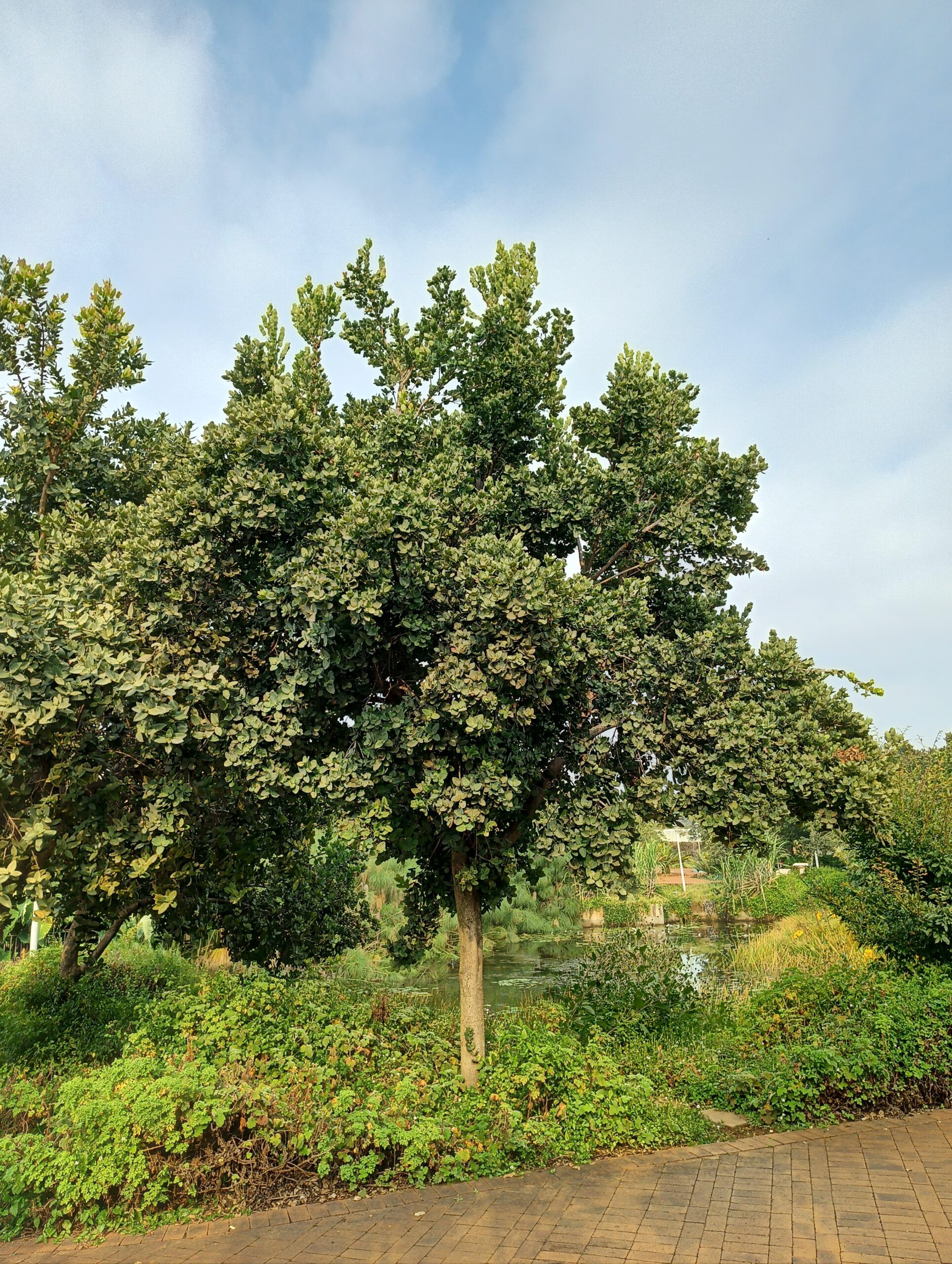
A young waterberry at the University of Pretoria’s Future Africa campus. Photo by Richard Hay
Syzygium cordatum is a fantastic option for gardeners looking to attract wildlife to their gardens. The large, dense canopy provides ideal nesting opportunities for many bird species. The large flower displays attract and provide for various pollinating insects and the high fruit yields attract a wide range of frugivores (fruit-eating animals) in summer. The species is also the larval host plant of three species of butterflies: the Morant’s orange butterfly (Pilodeudorix baginei), the Silver-barred charaxes (Charaxes druceanus) and the Apricot playboy (Deudorix dinochares).
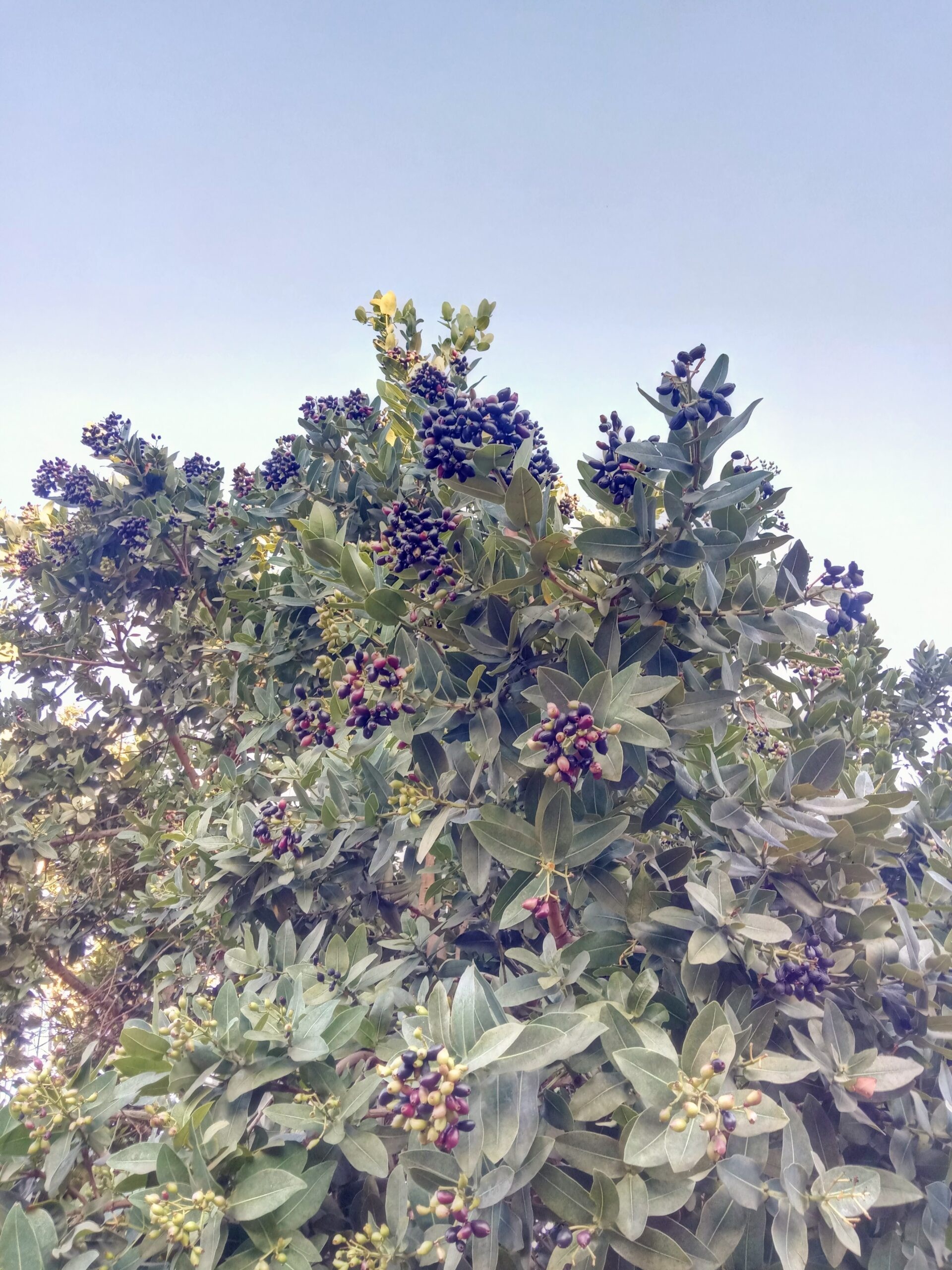
Fruiting waterberry. Photo by Richard Hay
Fruits of the species are edible and dark purple when ripe, with a slightly acidic and tart flavour. The species is incredibly high-yielding, with fruit ripening from mid to late summer. At the height of the fruiting season, mature trees can be completely covered in berries! The fruits can be eaten fresh, used to make preserves, or fermented. As part of last year’s Indigenous and Orphan Crops Dinner (https://botanicalsociety.org.za/putting-indigenous-crops-back-on-the-menu/) waterberry fruits were used to make a sorbet and the recipe is available for download here: https://botanicalsociety.org.za/wp-content/uploads/2024/12/10.jpg

Waterberry fruits used at the Indigenous and Orphan Crops Dinner. Photos by Hennie Fisher
Although we recommend this species as an easy option for starting or expanding edible landscapes, the species is a good example of how plants indigenous to South Africa can be locally invasive. Its popularity as a garden plant has seen the species in cultivation well outside of its natural range, and has escaped cultivation in the fynbos biome where it does not occur naturally. The species is particularly problematic around the Betty’s Bay area of the Western Cape, where hacking groups are working hard to remove the species from the fynbos. As always, we encourage our readers to incorporate more edible, indigenous species into their local landscapes but make sure the species you’re planting are appropriate for your biome. Syzygium cordatum is a fantastic option for our summer-rainfall readers looking for a fast-growing shade tree that will provide edible fruits and attract a wide variety of wildlife to your greenspace.
Richard Hay
Curator: Future Africa Indigenous and Orphan Crops Collection, Manie van der Schijff Botanical Garden, University of Pretoria
BotSoc Conservation Project Coordinator, Northern Region
richard.hay@up.ac.za or north@botanicalsociety.org.za
Jason Sampson
Head Curator: Manie van der Schijff Botanical Garden, University of Pretoria


JOIN BOTSOC
Know, grow, protect and enjoy South Africa’s indigenous plants.
JOIN NOW



Hours
Tuesdays from 08h00 to 16h00. Closed from Wednesday to Monday and public holidays.
Contact Us
We are experiencing intermittent faults with our landlines. If you can't get through on our landline +27 (0) 21 797 2090 , please phone or send a message to our alternate WhatsApp number: +27 (0) 65 922 6163.
Notice
From 1 March 2026, our office located inside Kirstenbosch National Botanical Garden (through Gate 2) will be open to assist members on Tuesdays only (08:00 – 16:00).