

How trees push
the limits of life
Some trees alive today germinated before the pyramids were built. Others have survived ice ages, droughts and shifting civilisations. How do trees push the limits of life? DR OLADAYO AMED IDRIS explores the science of plant ageing, uncovering the remarkable strategies that allow trees to endure for centuries – and why these ancient living giants are more vulnerable than ever.
The ancient bristlecone pine tree (Pinus longaeva) known as Methuselah. Photo by Laura Camp, licensed under CC BY-SA 2.0. Source: https://www.flickr.com/photos/24284031@N00/15162930976
Whether born in a golden bed or a garden bed, in soil or in a burrow, in water or somewhere above the ground, and whatever the colour, one thing is the same: ageing! It is a universal destiny for all living organisms, from humans to the giant whales to tiny bacteria and humble plants.
In humans, ageing is manifest as a gradual decline in physiological function, leading to observable changes like wrinkles, greying hair and sagging skin. In plants, ageing is subtler but equally profound, occurring in organs like the leaves that yellow and fall, flowers that wilt, or whole plants that complete their life cycle and die. Ageing is not merely a deterioration in organisms, as many assumed, but a well-regulated and purposeful phase of life. This biological process is known as senescence.
Despite their different appearances, plants and animals undergo similar ageing processes at the molecular and cellular levels. Both experience the accumulation of reactive oxygen species (ROS); metabolic slowdown as energy production declines; and programmed cell death (PCD), a deliberate gene-controlled elimination process targeting old or damaged cells, known as apoptosis. This convergence in ageing mechanisms highlights the fundamental biological principles shared across life forms.
What are ROS?
Reactive oxygen species (ROS) are the unstable and highly reactive molecules that damage DNA and cell membranes over time, contributing to ageing in both plants and animals.
The ageing gap between animals and plants
Understanding these processes sheds light on the ageing phenomenon and opens avenues for research into longevity and health enhancement. However, a few biological differences between plants and animals create an unimaginable, profound ageing gap between the organisms. Humans and animals are characterised by determinate growth – the body cannot grow beyond a limit, after which it begins to decline.
This blueprint is determined by the cells, as they have a replicative limit of 40 to 60 divisions before they can no longer divide, known as the Hayflick limit. This limit is closely linked to telomeres – which shorten with each cell division. Once telomeres become critically short, they signal the cell to enter senescence or programmed cell death (apoptosis).
The Hayflick limit therefore refers to the maximum number of times a normal human or animal cell can divide before it stops replicating. According to Leonard Hayflick, an American professor of anatomy and medical microbiology, this places the maximum potential human lifespan at around 120 years – a point at which cells with extremely short telomeres accumulate.
Over time, accumulated damaged cells and telomere shortening in cells lead to systemic decline. Other contributing factors to the progressive deterioration of function in humans include the decline of regenerative stem cells, the aggregation of misfolded proteins and accumulated cellular damage from ROS.
Telomeres and the Hayflick limit
Telomeres are protective caps at the ends of chromosomes that shorten each time a cell divides. Once they become too short, cells stop dividing – a process known as the Hayflick limit. This mechanism plays an important role in ageing in animals and humans.
Same tree, different ages
In contrast to animals, plants, particularly trees, exhibit indeterminate growth. Trees do not age uniformly. Different parts of the same tree can have different biological ages. For example, a centuries-old oak may contain both ancient hollow wood and young newly sprouted branches, a phenomenon known as modular ageing.
Plants possess meristematic tissues – pools of undifferentiated stem cells that differentiate into specialised cells when needed, season after season and century after century. Trees generally lack a fixed body plan and continue to produce new organs (leaves, roots and branches) throughout their lives. Senescence does not occur in the whole organism, as it does in animals; rather, it is a highly regulated, compartmentalised process.
Senescence in plants is slightly different from that of animals, although it is a genetically programmed process that targets the deterioration of cells, tissues, organs, or even the entire plant. Studies show that while it can’t be stopped, it can be modulated by changing genes, nutrients, or the environment. It is a developmental phase, not a disease, and it plays a critical role in recycling nutrients and ensuring reproductive success in plants.
Plants that die after flowering
For example, in many annual plants such as maize (Zea mays), senescence is induced following flowering and seed development. This is a coordinated process that involves extensive nutrient remobilisation from vegetative organs (leaves, stems and roots) to the developing kernels, eventually leading to the death of the plant. These are known as monocarpic plants, which flower and produce seed only once before dying. This process is controlled by physiological and molecular events, including complex interactions between genes, hormonal signals and environmental factors.
In contrast, perennial trees, such as oaks or baobabs, exhibit localised senescence. In this case, only certain parts such as leaves or branches age and die, leading to branch or leaf shedding, also known as cladoptosis and abscission, respectively. This type of senescence is common in deciduous trees during the autumn, while the rest of the plant continues to live, sometimes for centuries.
Shifting priorities in trees
Senescence in trees is influenced by both internal (genetic) and external (environmental) factors. Unlike animals, which have a strict separation between germ cells (those that produce eggs and sperm) and somatic cells (body cells), plants retain pluripotent meristematic stem cells throughout their lives. These stem cells allow trees to continuously produce new tissues and organs as needed. As a tree ages, its priority shifts from producing new tissues and organs to maintaining the existing ones, resulting in a reduced canopy and leaf size while increasing the root system.
This remarkable capacity may be envied by humans: it is a characteristic that facilitates tree rejuvenation and contributes to their extreme longevity. When an injury or infection occurs, trees use a natural defence mechanism known as Compartmentalisation of Decay in Trees (CODIT). CODIT isolates damaged or infected tissues behind “chemical walls”, preventing rot from spreading. In contrast, the immune system in animals focuses on repair and immune defence by fighting infection and disease.
What is CODIT?
CODIT (Compartmentalisation of Decay in Trees) is a defence mechanism in trees. When damaged or infected, trees isolate affected areas by forming chemical barriers, preventing decay from spreading.
Responding to stressors
The CODIT mechanism could be described as a form of biological quarantine. It enhances the longevity and tolerance of trees to external stressors, often leading to isolated wood cores forming or quarantine sections that can persist for centuries, creating different biological ages between the newly sprouted branches or stems and the rest of the tree.
CODIT often results in the formation of hollow trunks, which can potentially weaken the structural integrity of trees. Plant hormones, notably ethylene, abscisic acid, cytokinins and jasmonates, play a key role in regulating senescence, including its timing and progression. These hormonal signals influence complex signalling pathways, which can either delay or accelerate organ senescence in plants. This level of plasticity is not as pronounced in animals.
Similar to animals, tree cells accumulate ROS – the unstable molecules that damage DNA, proteins and cell membranes. However, trees produce powerful antioxidants that neutralise ROS, which contributes to their longevity.
Survival over growth
Old trees often show common morphological (physical) and physiological features. Even when the environmental conditions are right, older trees often show lower relative growth rates because they prioritise survival over rapid growth. Physically, old trees typically exhibit a reduced crown, a wide girth, hollow trunks and increased buttresses. These architectural changes are adaptive strategies for longevity.
Scientists employ various methods to determine the age of trees, which include the analysis of growth rings – known as dendrochronology – and radiocarbon dating. Dendrochronology uses growth rings or annual rings to determine a tree’s age. These rings form as a result of seasonal variations in climatic conditions, which influence plant growth and produce layers of contrasting tissues, visible as rings in the wood.
In most cases, each growth ring corresponds to one year of growth, with the outer rings, closest to the bark, representing the most recent growth (see Figure 1). Ancient trees typically have densely packed growth rings, and horizontal cross-sections of the trunk can reveal these patterns.
Ancient trees store significant amounts of carbon compared to younger trees, stabilise the soil, support specialised biodiversity by harbouring many other organisms, produce large quantities of beneficial aerosols and contribute to the creation of unique localised climatic conditions known as microclimates common in old-growth forests.
Why conservation of trees matters
As trees grow taller, water must travel greater distances against gravity, from roots to leaves several metres high. After many years, xylem vessels (water-conducting tissues) can become blocked by air bubbles or decay, resulting in reduced hydraulic efficiency. This process limits photosynthesis and nutrient transport, gradually weakening the tree.
External factors, including drought, wildfire and climate change, alongside human activities such as timbering and various land uses like mineral exploitation and agriculture, can worsen the challenges faced by ancient trees, placing additional stress on their ability to thrive. All of these, either individually or in combination, can reduce tree canopy size, decrease growth rings, reduce seed production, increase susceptibility to stress, cause branch dieback and hollow trunks, or sometimes cause the death of the tree. As a result, conservation efforts have become increasingly necessary to protect trees and their ecosystems from further degradation.
The value of trees
From an economic and cultural perspective, old-growth trees are valuable. They attract tourists, serve as a source of traditional medicines and are a living testimony to time and heritage, particularly to the communities that host them. Many sacred or historic trees also serve as living links to human history.
For example, in 1993, the clearing of the hollow interior of an ancient baobab tree known as Sunland Baobab in Limpopo, South Africa, uncovered archaeological evidence of early Dutch settlers, identified as Voortrekkers, alongside signs of Bushmen’s presence. These finding suggest a long-term relationship between the tree and human communities.
Recently, old-growth trees have been facing immediate and increasing threats due to surging land-use changes and air pollution, over-harvesting and invasive species such as insects and herbivores that are devouring them. Added to that, climate change is causing unprecedented climatic conditions like droughts, wildfires and torrential rains.

Figure 1: The growth rings of a tree at Bristol Zoo, England. Source: https://commons.wikimedia.org/w/index.php?curid=447580
Some of the oldest living trees
Some trees alive today germinated before the ancient Egyptian pyramids were built, and they were already old when ancient civilisations began. Their growth rings are exceptionally narrow and tightly spaced, providing priceless chronological records for climate scientists and archaeologists. There are several identified ancient trees living today – here’s a review of three of them.
Methuselah (Great Basin bristlecone pine – Pinus longaeva):
The Great Basin bristlecone pine, nicknamed Methuselah, is the oldest known non-clonal living organism (not regenerated or vegetatively cloned), estimated to be about 4 900 years old, and grows in the harsh, arid White Mountains of Inyo County, eastern California, USA (Figure 2). To keep it safe from vandalism and reduce the impact of people, its exact location is kept confidential.
Its longevity is attributed to its incredibly dense, resinous wood, which is highly resistant to decay, insects, fungi and even wildfires, characteristics known for bristlecone pine woods. After examining the tree, scientists have suggested that its slow growth rate is brought about by the challenging environment. This in turn leads to narrow xylem vessels that reduce cavitation and limit structural defects and the spread of pathogens. This adaptation is believed to be the secret to the tree’s long lifespan. It is a prime example of how stress can promote longevity.
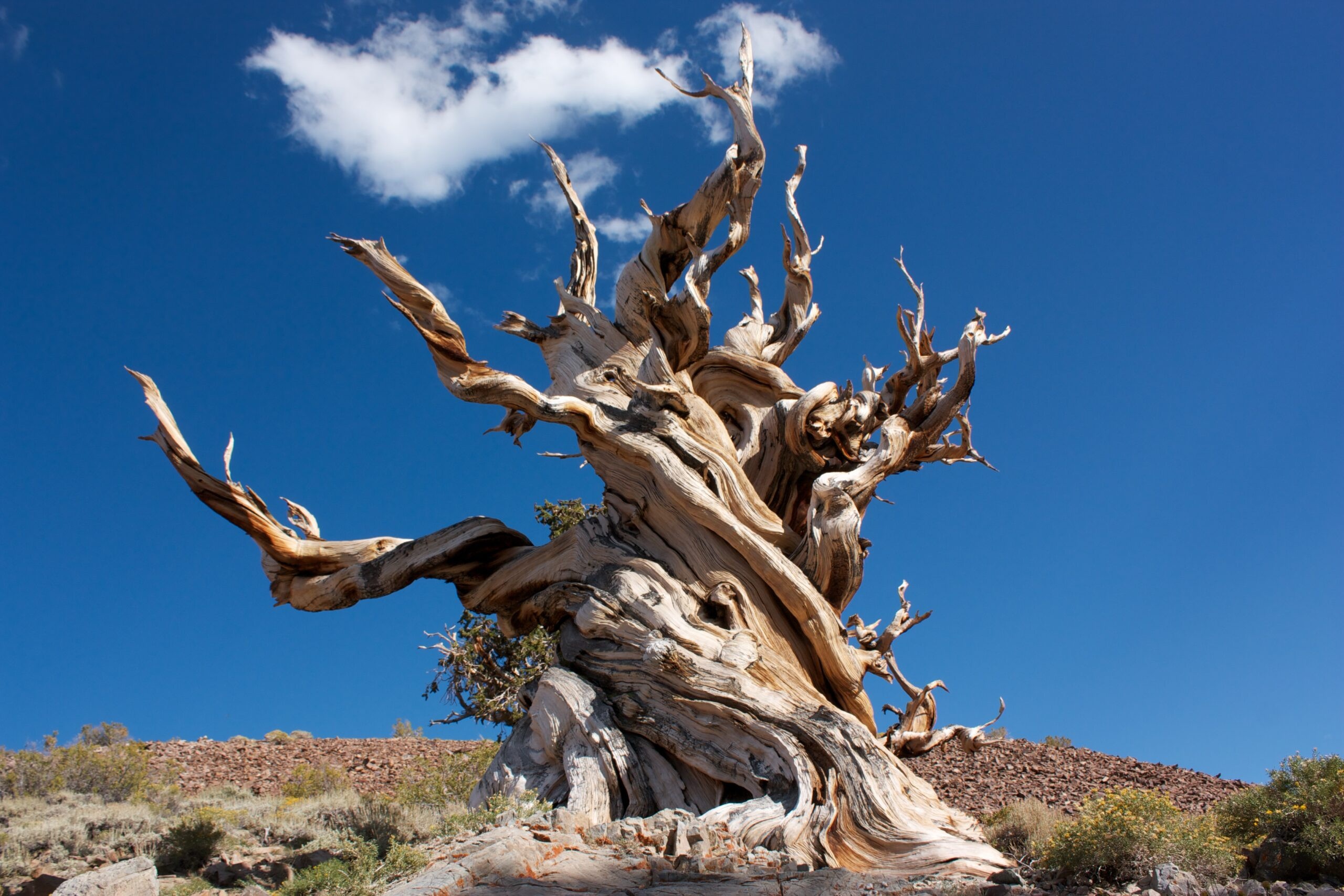
The ancient bristlecone pine tree (Pinus longaeva) known as Methuselah. Photo by Laura Camp, licensed under CC BY-SA 2.0. Source: https://www.flickr.com/photos/24284031@N00/15162930976
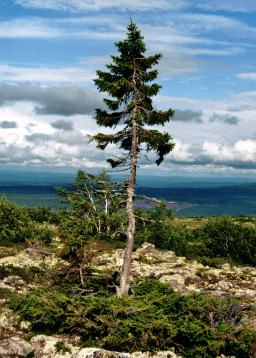
Figure 3: Norway spruce (Picea abies) known as Old Tjikko. Photo by Karl Brodowsky, licensed under CC BY 3.0. Source: https://commons.wikimedia.org/w/index.php?curid=17496567
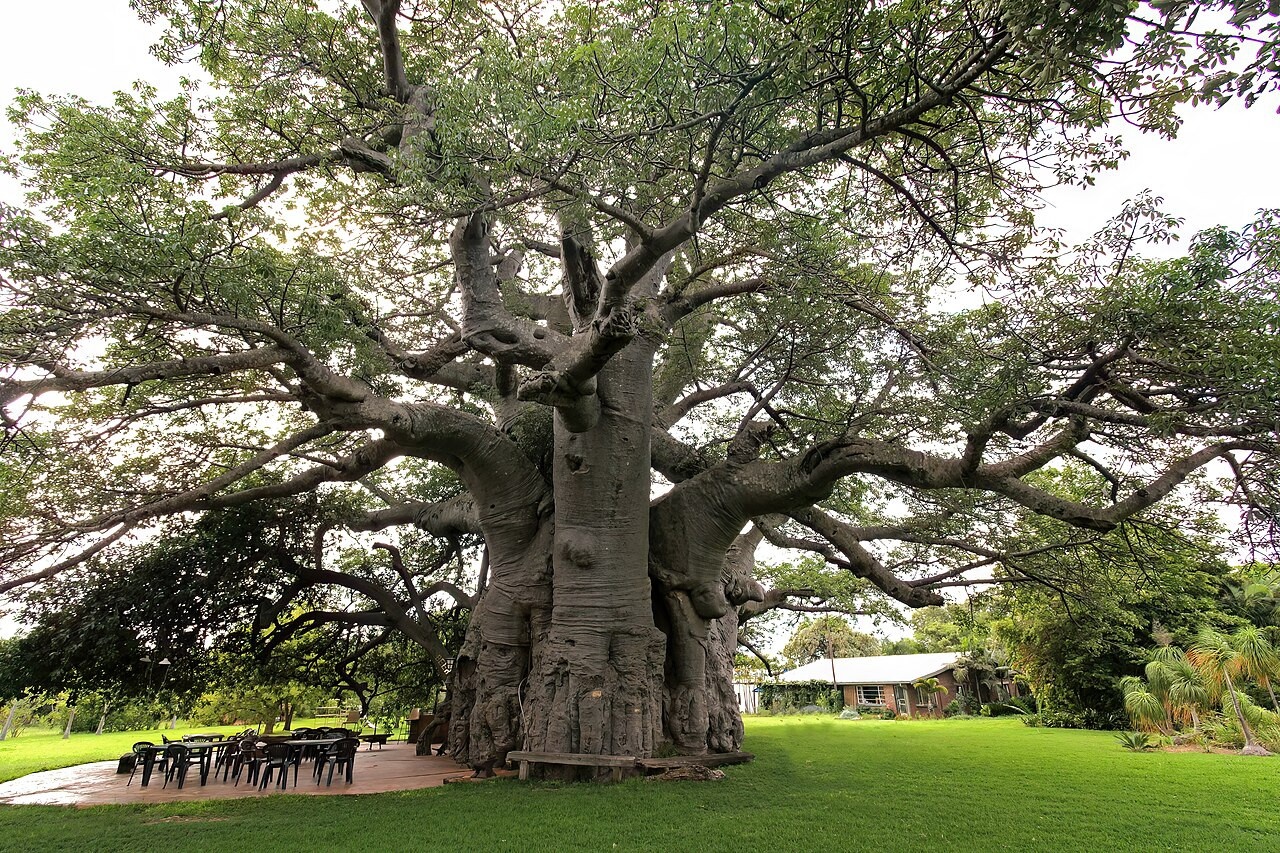
Figure 4: The Sunland Baobab (Adansonia digitata) before it collapsed. Photo by SAplants, licensed under CC BY-SA 4.0. Source: https://commons.wikimedia.org/wiki/File:Adansonia_digitata_50D_0748.jpg
Old Tjikko (Norway spruce – Picea abies):
The oldest known Norway spruce, nicknamed Old Tjikko, is estimated to be 9 567 years old and is located in the Dalarna province in Sweden (Figure 3). Old Tjikko is a clonal tree that has regenerated new trunks, branches and roots over millennia rather than an individual tree of great age, like Methuselah. Its trunk is estimated to be only a few centuries old – having died and regrown many times – but the root system is nearly 10 millennia old.
This clonal longevity exemplifies how a tree’s modular ageing mechanism works in localised senescence. For clonal trees such as Old Tjikko, the use of dendrochronology is ineffective for determining their age. Instead the tree’s age was determined by carbon dating the material collected from its roots.
The Sunland Baobab (Adansonia digitata):
Africa’s baobabs have amazed scientists with their remarkable ages. Radiocarbon analyses show that some African baobabs are more than 1 200 years old, and a few multi-stem individuals may preserve wood that is more than 2 000 years old. The Sunland Baobab (Platland Baobab) in Limpopo province, South Africa, is one of the iconic baobabs. It was carbon-dated and estimated to be about 1 060 years old.
After 1993, the Sunland big baobab became a popular tourist attraction when the owners of Sunland Farm established a bar and wine pub inside its hollow trunk. The hollow trunk of the Baobab demonstrated compartmentalisation in trees, which results from both ageing and environmental factors such as fire. However, these changes did not interfere with its physiological functions until a structural weakness caused it to partially collapse in 2016, and it died in 2017. Baobab longevity is linked to their large water-storing trunks, fire-resistant bark and capacity to regenerate bark and vascular tissue to cover damaged areas (Figure 4).
Trees: pushing the limits of life
Tree ageing is not about decline, as in animals, but about resilience, endurance, adaptation, stress tolerance and balance with the environment. Human ageing is inevitable, but trees show that longevity and vitality can go hand-in-hand. They age gracefully, hollow inside yet green at the crown, weakened in wood yet blossoming and alive.
From a cultural and scientific perspective, trees offer something deeper. Standing before an ancient Bristlecone Pine means confronting the vastness of geological time and the brevity of human history. These trees have survived ice ages, mega-droughts and shifts in civilisation. But they now face modern threats, including climate change, invasive species, disease infestation, increased wildfire severity and human activities. Their remarkable ability to rejuvenate, persist clonally and re-organise nutritional resources through programmed senescence has enabled them to successfully push the limits of life and secure their place among the planet’s oldest living organisms.
About the author
Dr Oladayo Amed Idris is an ethnobotanist and the collections manager at the Division of Botany, Department of Animal and Plant Systematics, National Museum Bloemfontein. Email: oladayo.idris@nasmus.co.za
Further reading:
Boccardi, V., Paolisso, G., & Mecocci, P. (2016). Nutrition and lifestyle in healthy aging: the telomerase challenge. Aging (Albany NY), 8(1), 12.
Gilhen-Baker, M., Roviello, V., Beresford-Kroeger, D., & Roviello, G. N. (2022). Old growth forests and large old trees as critical organisms connecting ecosystems and human health. A review. Environmental Chemistry Letters, 20(2), 1529-1538.
Hayflick, L. (1976). The cell biology of human aging. New England journal of medicine, 295(23), 1302-1308.
Quesada-Román, A., Ballesteros-Cánovas, J. A., George, S. S., & Stoffel, M. (2022). Tropical and subtropical dendrochronology: Approaches, applications, and prospects. Ecological Indicators, 144, 109506.
JOIN BOTSOC
JOIN NOW

Hours
Tuesdays from 08h00 to 16h00. Closed from Wednesday to Monday and public holidays.
Contact Us
We are experiencing intermittent faults with our landlines. If you can't get through on our landline +27 (0) 21 797 2090 , please phone or send a message to our alternate WhatsApp number: +27 (0) 65 922 6163.
Notice
From 1 March 2026, our office located inside Kirstenbosch National Botanical Garden (through Gate 2) will be open to assist members on Tuesdays only (08:00 – 16:00).
0 Comments