

From ashes to action: The Cederberg recovers
A devastating fire in the Cederberg wilderness area left much of the landscape in ruin. At stake was the critically endangered Clanwilliam cedar tree. Yet from the ashes, a remarkable collaboration emerged. Volunteers from a wide range of organisations came together to begin restoring this wilderness. BOT SOC’s TENEAL BARNARD joined the efforts.
PHOTOS BY TENEAL BARNARD
The aftermath of the fire across the Cederberg landscape.
In the rocky Cederberg mountain range, you can still smell the smoke and the rivers are still black with soot. Over a 15-day period starting on 22 December 2025 to early January 2026, the Cederberg experienced a devastating wildfire.
What started as a small fire in the 80 000-hectare Cederberg wilderness area, grew to consume more than 53 000 hectares – nearly 66% of the wilderness area. Strong winds in the area caused the fire to spread rapidly and unpredictably. Through partnerships and the support of many volunteers, the fire was finally extinguished.
When tallying the cost of the fire, some staggering figures emerge. Between CapeNature, Working on Fire, Volunteer Wildfire Services and municipal fire services, more than 2 100 person days were spent battling this wildfire (a cumulative measure of people on the ground over time). At the same time, a total of 55 flying hours were logged.
For both trained and untrained responders, the scale of this fire must have been intimidating. Yet, through the relentless efforts of these groups, no human lives or homes were lost. CapeNature even reported that far fewer animal lives were lost than anticipated.
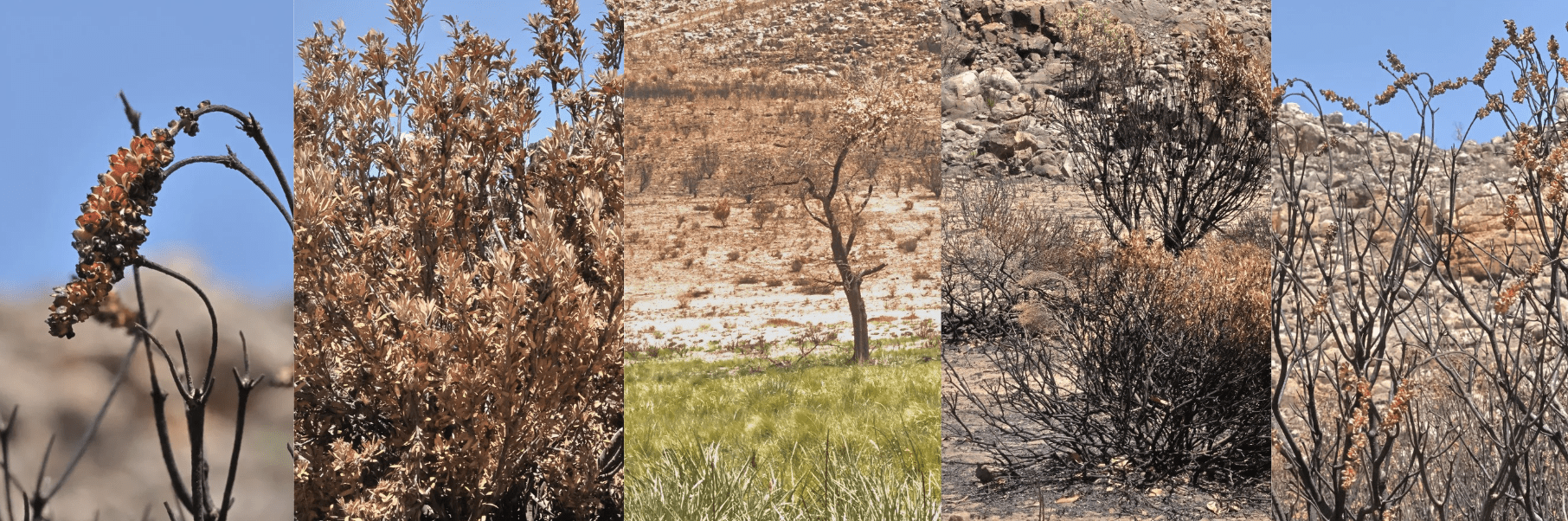
Scars left behind by the wildfire in the Cederberg.
A ‘good’ fire?
Fire is a necessary part of fynbos, which is a fire-driven ecosystem. However, this natural rhythm becomes disrupted when fires occur in veld younger than 10-17 years – vegetation that is ideally too young to burn.
During this wildfire, some of the veld affected was relatively young at 7-10 years. Fortunately the majority of the veld was much more mature, with some areas not having burned since 1968, 1975 and 1978. While it could be argued that it was a ‘good’ fire, fires are far more beneficial when they burn in a mosaic pattern, leaving pockets of unburnt veld as a haven for the species they host.
Meet the giant of this landscape
The Cederberg is an incredibly biodiverse wilderness area. Here you’ll find the critically endangered Clanwilliam cedar tree (Widdringtonia cedarbergensis), a giant in this shrubby landscape that is hard to miss.
About 10 years ago, only around 20 000 of these slow-growing trees remained in the mountains. Their greatest threats were historical logging and frequent fires. However, thanks to the tireless work of organisations such as Sustainable Ceder, many cedars have been reintroduced to the Cederberg – an effort that is becoming more important in a post-fire landscape, particularly for a species that only reaches seed-bearing maturity after 20–30 years.
Volunteering for the Cederberg
Over the weekend of 20-22 February 2026, organisations united by a love for nature, indigenous plants and the outdoors joined hands to begin restoring the damage caused by the fire to the Cederberg wilderness area. The event, a partnership between Sustainable Ceder, CapeNature and Love Our Trails, was very successful.
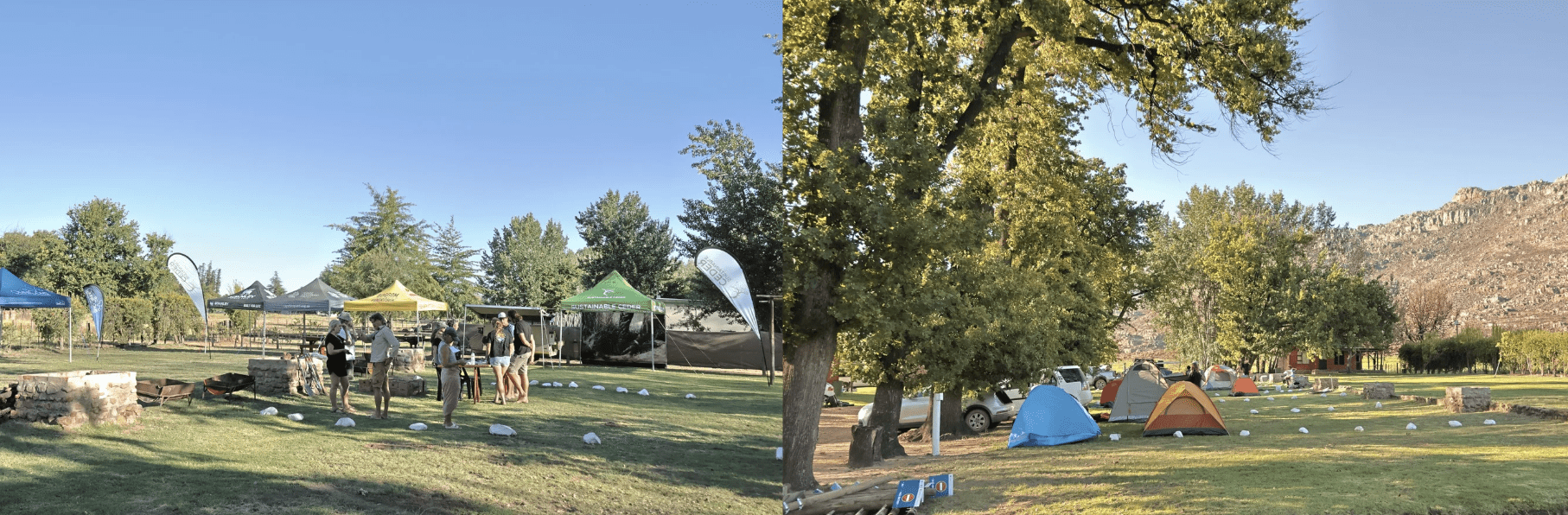
Base camp for the Cederberg volunteer weekend.
Around 120 volunteers joined the auditing and repair work – an impressive number of people taking on demanding tasks under the Cederberg sun. The audit included assessing trails, cedar tree populations, alien vegetation and signage that needed to be replaced. Teams also repaired the trails by removing burnt signage, picking up litter, clearing alien vegetation, filling potholes and fixing broken steps along the trails.
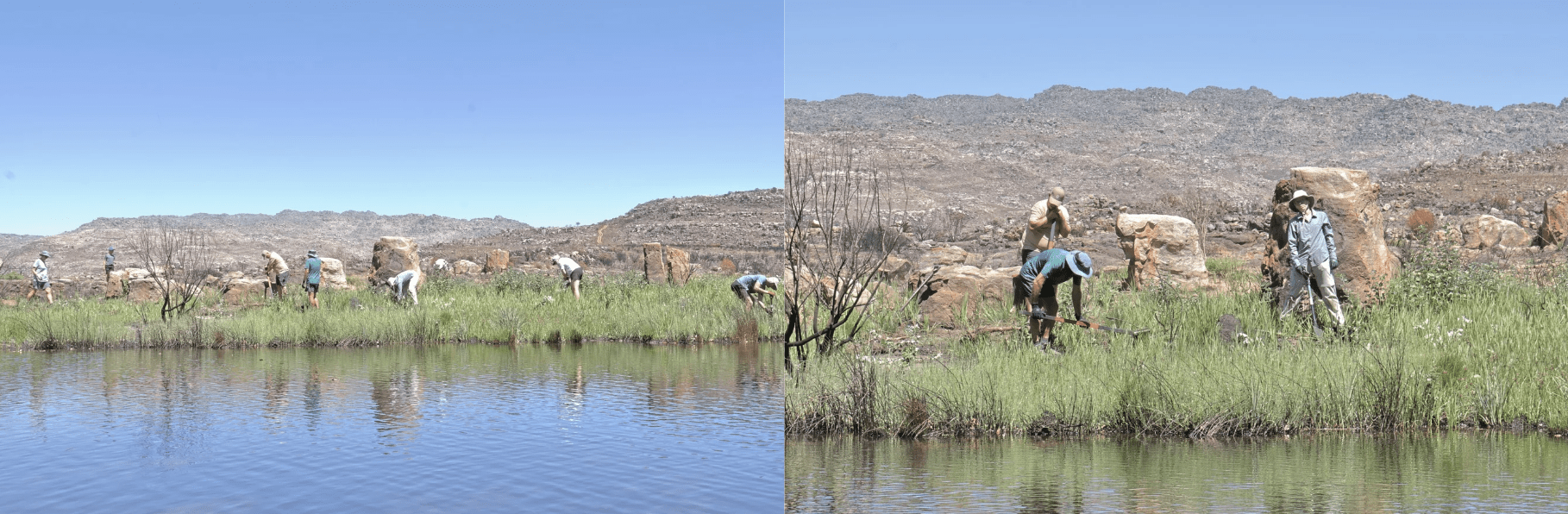
Volunteers get to work clearing invasive species along the riverbank.
To prepare for winter rains and reduce landslides, volunteers created safe waterways such as drains, culverts and side gutters and cleared existing waterways of sand, debris and soot. Volunteers also installed no entry signs at the beginning of trails that were not ready for use.
We owe our green spaces
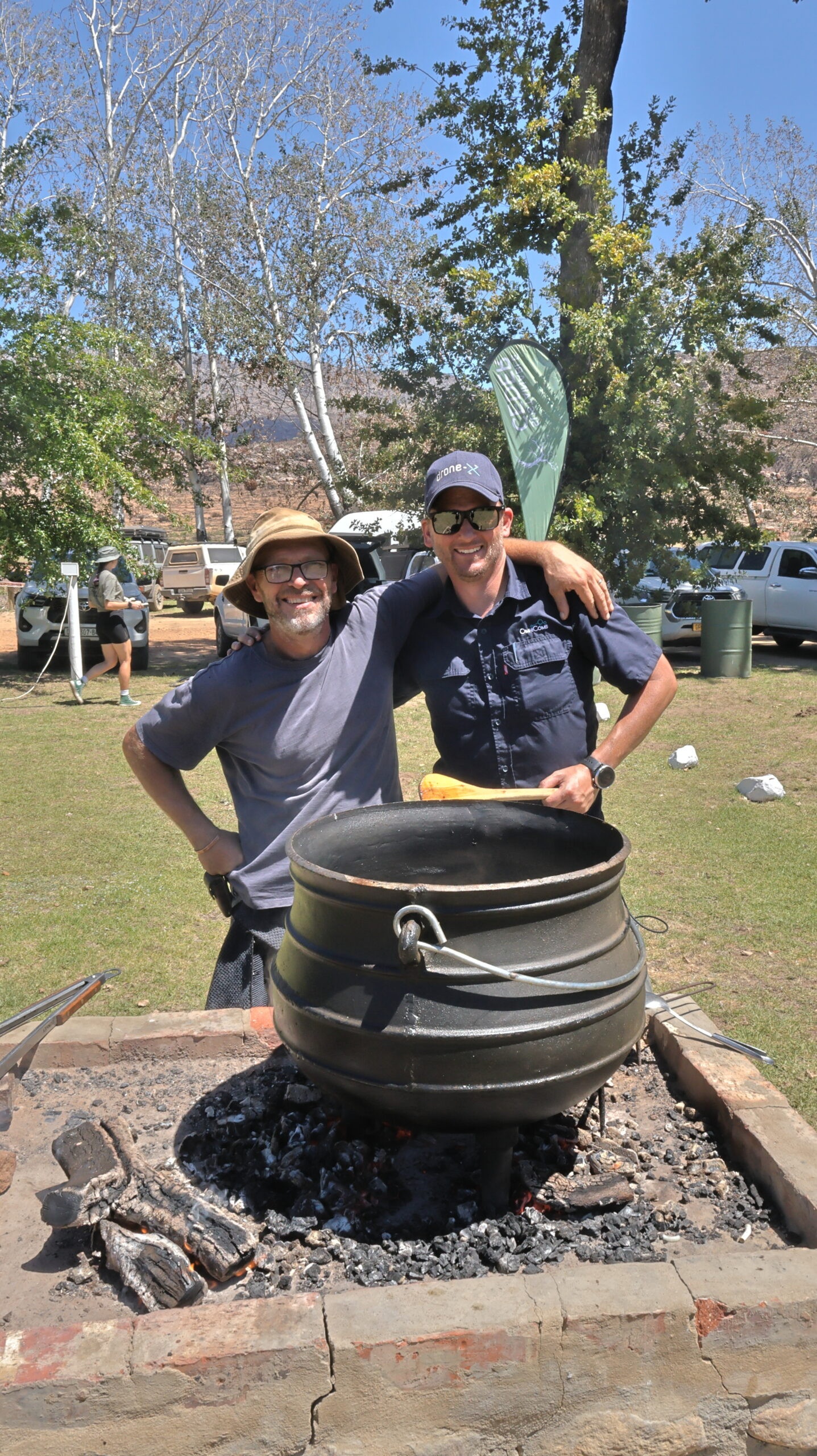
Fuel behind the effort: keeping volunteers going was one of the most important roles of the weekend – and the chefs delivered.
Together these teams covered roughly 20 trails from Friday through to Sunday, while also working on roads and rivers. Beyond a strong shared love for nature, the volunteers brought a range of specialised skills, including emergency response, paramedics and drone operators, among others. Throughout the weekend, one theme stood out: acknowledgement of the responsibility we have to the green spaces we enjoy.
Cederberg communities also got involved with about 13 local communities, each led by a community leader, picking up litter in their community. Sponsors contributed by providing radio and camera equipment for the weekend, setting up radio stations on mountain tops for ease of communication. Chris, a volunteer, developed an app for the weekend to keep all the audit information centrally located.
Volunteers also played an important role in clearly demarcating trails. The fires burned much of the vegetation around the trails, making it easier for hikers to stray off path once the trail reopens. As Monique from CapeNature explained, the 18-30 months following a fire are a critical recovery period. During this time, it is essential that these areas remain undisturbed, as the seeds start to germinate and the animals search for food. Just like humans, the veld needs space to recover. Any disturbance could have devastating consequences.
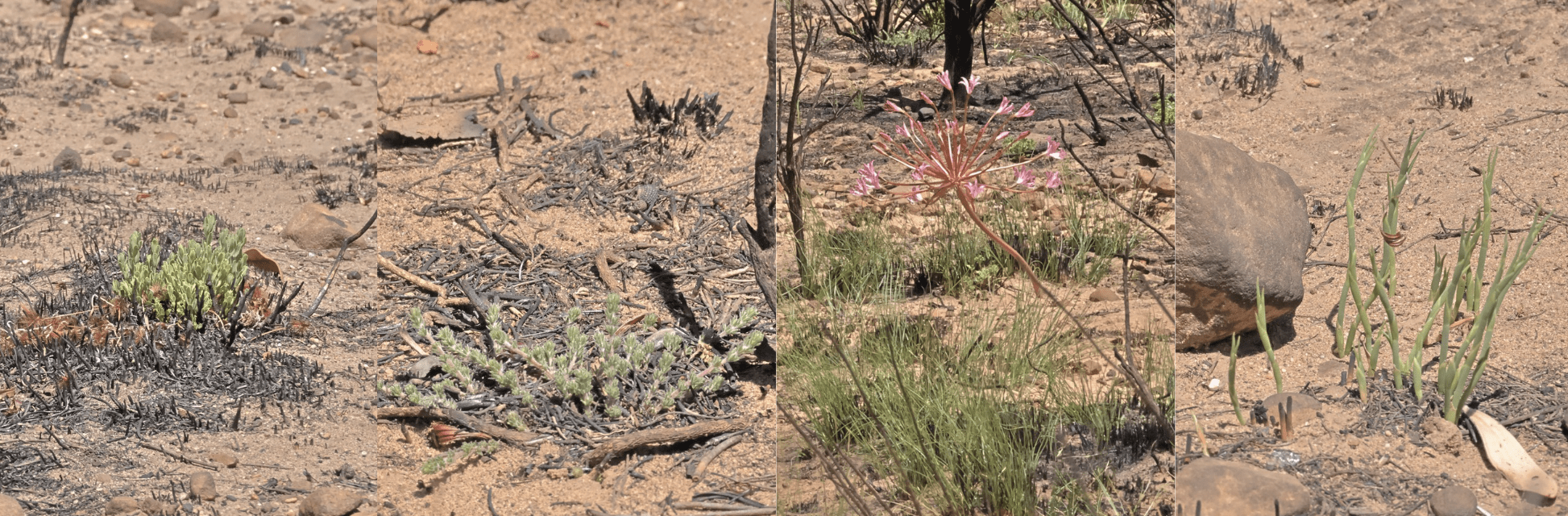
New life begins to emerge in the wake of the fire.
Giving to our Cederberg peers

Dawie from Sustainable Ceder receives firefighting sustenance packs from BOT SOC’s Josh Nienaber.
Blake from Love Our Trails outlines the weekend’s goals in the barn at Driehoek tourist farm.
In the spirit of collaboration over the weekend, BOT SOC donated 30 firefighting sustenance packs to Sustainable Ceder, including refreshments and first-aid items, for future firefighting efforts. BOT SOC also donated machetes to aid in alien vegetation clearing and BOT SOC is committed to donating fire beaters and fire-resistant balaclavas to Sustainable Ceder for the upcoming fire season.
Sitting in the barn on the Driehoek tourist farm, listening to Blake from Love Our Trails explain the goals for the weekend, one couldn’t help but feel inspired by the many people willing to put in the work to support the restoration of such a rich wilderness area. BOT SOC commends all organisations and nature lovers involved and we look forward to seeing the impact made.
How can you help the Cederberg recover?
- Support local businesses that have been impacted by lower visitor numbers following the fire, as well as conservation organisations and related causes.
- Volunteer with the Cederberg Volunteers.
- Be a responsible user of wild spaces: when you’re hiking, take your own litter home and pick up additional litter you find along the way.
- Avoid making fires in wilderness areas.
- Stay on the path, no matter how enticing walking off-trail may seem.
JOIN BOTSOC
Know, grow, protect and enjoy South Africa’s indigenous plants.
JOIN NOW

Hours
Tuesdays from 08h00 to 16h00. Closed from Wednesday to Monday and public holidays.
Contact Us
We are experiencing intermittent faults with our landlines. If you can't get through on our landline +27 (0) 21 797 2090 , please phone or send a message to our alternate WhatsApp number: +27 (0) 65 922 6163.
Notice
From 1 March 2026, our office located inside Kirstenbosch National Botanical Garden (through Gate 2) will be open to assist members on Tuesdays only (08:00 – 16:00).
0 Comments