
A royal transformation at Princess Vlei
Restoration at Princess Vlei has come a long way in recent years. DENISHA ANAND, EMMA OLIVER and BRIDGET PITT report on the progress made, the obstacles ahead and the plans to overcome them.
The water hyacinth clearing team celebrate a day’s work
“Because we love the earth and the waters, we pledge to protect and preserve Princess Vlei, to honour its natural beauty, to safeguard its wildlife and to ensure it remains a sanctuary for future generations. We pledge care, respect and sustainable practices. We commit to nurturing this vital ecosystem.”
With these words, learners from Levana Primary School took the pledge to become guardians of their local nature reserve – a meaningful gesture, considering the years of restoration work invested to ensure the protection of Princess Vlei for future generations.
The pledge was taken during the launch ceremony of a floating sculpture in 2024. The sculpture – created in honour of the Khoe princess who gave Princess Vlei its name – aims to raise awareness of the history of the site, and of the indigenous wisdom of our Khoe and San ancestors who lived harmoniously with the land.
This ceremony formed part of an ongoing programme to engage community members, young and old, in connecting with and caring for the Greater Princess Vlei Conservation Area (GPVCA). The programme includes field trips, planting, litter clearing, iNaturalist bioblitzes, citizen-science activities and creative projects inspired by nature.

Learners from Levana Primary make a pledge to protect nature at the Princess Vlei Forum Living waters Ceremony

Floating sculpture created by volunteers from the Princess Vlei Forum, Peter Clarke Art Centre and Lotus High to honour the legendary Khoe princess of Princess Vlei and remind people of the need to care for our natural waterways
Working for the community
The GPVCA is a sprawling wetland reserve bordering Grassy Park, Retreat, Southfield and Elfindale. Designated as a recreational area for people of colour under apartheid, it has suffered from decades of neglect, and is still severely under-resourced. Despite this, the area contains critically endangered Cape Flats Sand Fynbos and a sizeable portion of intact Dune Strandveld – both with the potential for further restoration.
In 2018, the Princess Vlei Forum (PVF) embarked on a five-year restoration plan aimed at rehabilitating over six hectares of these two vegetation types. The project honed our knowledge of historically occurring species and resulted in a massive increase in biodiversity. Over 100 species were reintroduced – including 11 red list species – and close to 15 000 plants were put in the ground, as well as several hundred seeds.
Our work in restoring the wellbeing of the land goes hand in hand with fostering the wellbeing of the community, and is guided by three core principles:
- Nature conservation depends on passionate and informed nature guardians. We count on them to show up for litter drives, planting and invasive alien clearing – and to help defend public lands from destructive development. Public pressure is also needed for politicians to enshrine nature protection in law, policy and governance.
- Passion for nature comes from positive experiences in nature. If you don’t know it, you can’t love it.
- Spending time in nature is essential for our physical and emotional wellbeing. The GPVCA plays a vital role in providing this opportunity to communities with little access to other natural spaces.
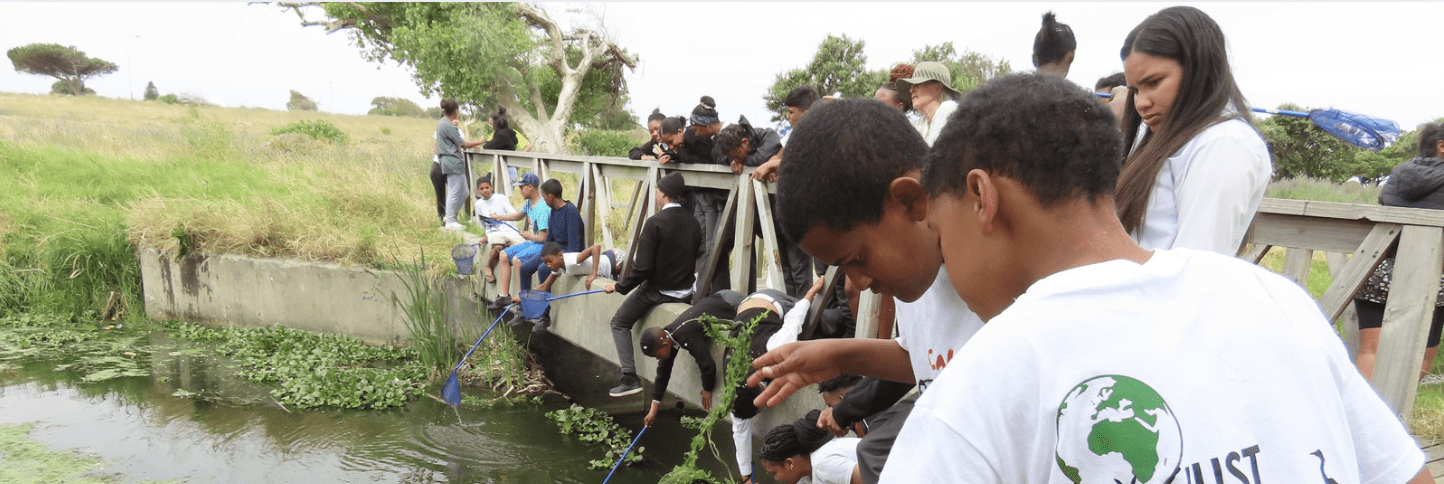
Primary school learners search for specimens of aquatic fauna such as Western leopard toads. These are transferred to a holding container to be studied, and are then released.
Pinpointing the obstacles
The five-year project was completed in December 2023. Since then, we have been assessing the gains and losses, and charting a way forward. We have identified the challenges to restoration, and have prioritised finding solutions. Here are the main challenges we face:
Inadequate on-site management
The GPVCA falls under the management of the Department of Recreation and Parks, with an agreement to manage it as a biodiversity site. Despite its 100 ha size, it does not have a dedicated site manager. From 2017 to 2020, we paid for a full-time site manager at Princess Vlei. The positive impact of this prompted the City of Cape Town (CoCT) to create a post for a superintendent. Unfortunately, while the official is qualified to work in a conservation area, he manages several other biodiversity sites in the same area. This has resulted in a lack of dedicated on-site conservation management.
Furthermore, the management of the water body falls under the Department of River Catchment and Stormwater management, which has different priorities. There is also a lack of resource allocation to the site. The gap in management, and the lack of communication between various role players, has led to several operational disasters with a devastating impact on our restoration efforts.
Irresponsible mowing
Despite efforts to make GPVCA and other areas no-mow zones, mowing operations under Recreation and Parks have decimated critically endangered Cape Flats Sand Fynbos. Some residents pressure officials to mow because long grass is perceived to be untidy, so raising public awareness of biodiversity is important. While adjustments to the mowing schedule have enabled the seeding of some wildflowers such as rain daisies, our restoration projects remain threatened due to unsupervised contractors. This was starkly illustrated last month when our restoration site on the northern shore was mowed to the ground, destroying hundreds of plants – including three Protea species.
Hyacinth and heavy machinery
Princess Vlei has been heavily impacted by invasive water hyacinth. The heavy machinery Stormwater and Catchment uses to remove this has caused widespread destruction of the shorelines and our restoration areas. This has led to a decline in wetland bird activity, as well as loss of biodiversity in our restoration plots due to unsupervised contractors. This method is also ineffective and extremely costly, and the PVF has been campaigning for years for a change. The CoCT has now produced a comprehensive water hyacinth management plan, which is a positive first step. Now it’s essential to obtain the capacity to implement the plan.

Ongoing maintenance
Our restoration sites require maintenance after about two or three years to reduce the impact of encroaching invasive grasses and other alien plant species. As there are no large herbivores on site, we also need to cut back some of the larger indigenous shrubs. Maintenance should be the task of the CoCT, but unfortunately resources here are stretched. While the Expanded Public Works Programme (EPWP) teams have assisted, they are given only short-term contracts and the lack of supervision from the CoCT has also been a challenge. We have used our own work teams and volunteers for this, but it is heavy work for volunteers.
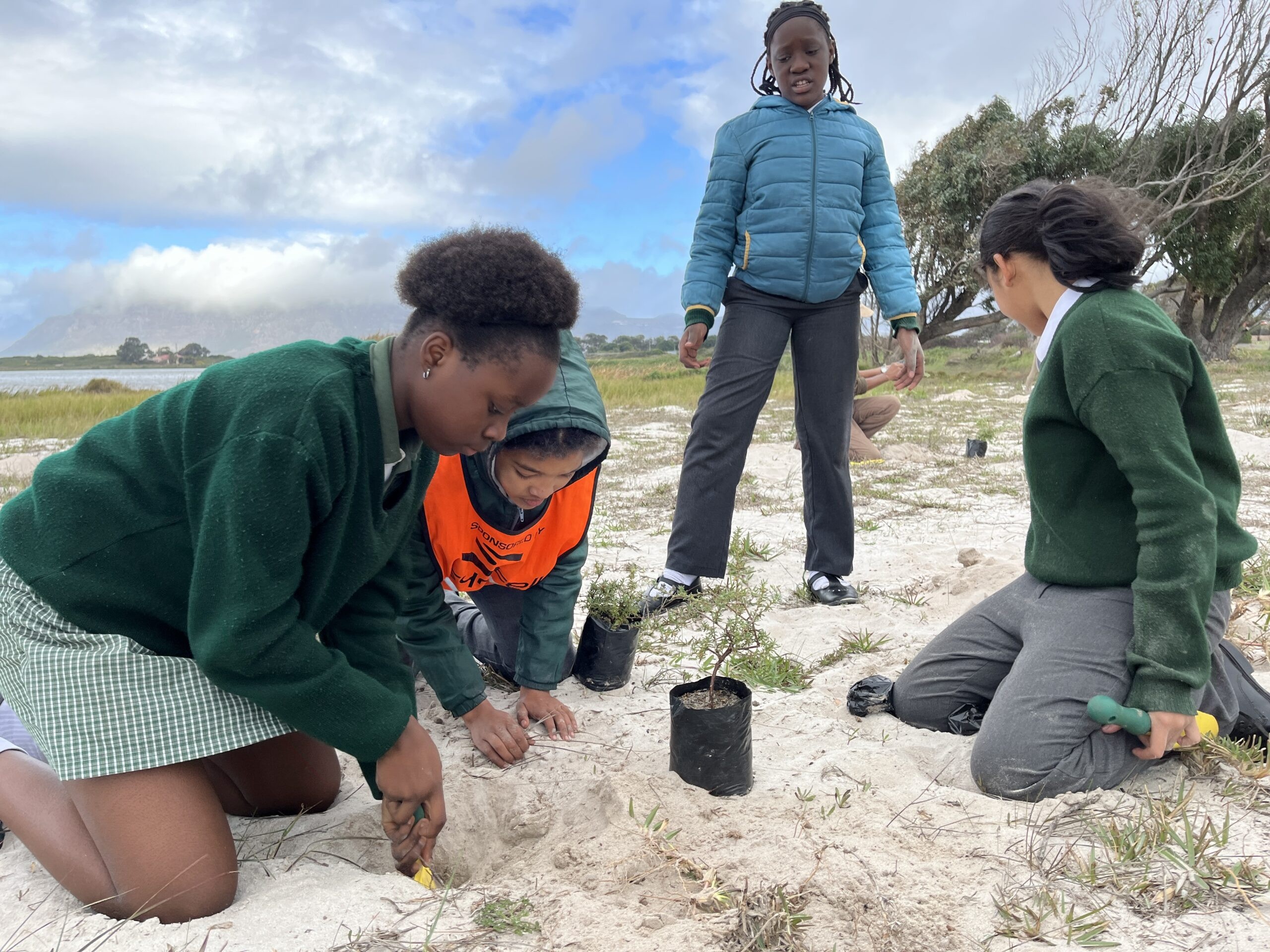
Levana Primary plant Serurias in the restoration area on the northern shore of Princess Vlei in May 2023. In February 2024 all these plants and those planted before were destroyed by an unsupervised mowing contractor for the City
Social challenges
The GPVCA also faces the same challenges as any large natural area in a socio-economically depressed community. These include activities such as illegal sand mining, littering, quad bikes, vagrancy, vandalism, illegal harvesting and fires. In 2024, we experienced more than eight fires between the Greater and Little Princess Vlei conservation areas. These fires may be caused by burning stolen cables to extract copper, people creating temporary shelters, or arsonists. While burns are necessary drivers in the Fynbos Biome, frequently burning Strandveld may result in species decline. These fires have damaged our restoration area along the western shore.
Looking ahead: Priorities for 2025
A priority this year is to improve the management of the GPVCA. We believe that the best option is to declare the site a Protected Natural Area and move its administration to the CoCT’s Biodiversity Management Branch. We will continue to work towards this goal.
We will also resume alien clearing, maintenance of restoration sites, seeding and seed collections and litter clearance. Our specific priorities include:
Water alien control
In response to the damage caused by hyacinth operations, the PVF has invested heavily in managing the invasive water hyacinth (Pontederia crassipes) and water primrose (Ludwigia Peruviana). As Category 1a invasive species, their removal is mandatory. With funding from the Hans Hoheisen Charitable Trust, and non-compliance funding channelled through Nature Connect, the PVF has launched a three-boat team to do hand clearing. This team is led by the ‘Princess’: a motorised boat with an innovative attachment to act as a ‘hyacinth plough’. More than 55 truckloads of hyacinth and primrose have been taken from the water and carted away by the CoCT this year – about 30 percent of the vegetation that needs clearing. The work will continue until the Western leopard toad breeding season in July. While the PVF is making significant inroads into the problem, we are now working with the COCT for further input and hopeful that we will obtain an undertaking to sustain hand teams in the long term.
Construction of the pathway
On behalf of the local community, the PVF has successfully appealed to the CoCT to construct a walkway around the vlei. While this will be a valuable community asset by making the GPVCA more accessible to hikers and bird lovers, the process of construction needs to be carefully monitored. The PVF is working with the CoCT, planners and contractors to ensure minimal destruction. We also hope to use the landscaping aspect of the engineers’ work to promote restoration of appropriate indigenous species.
Two faunal restoration projects
This year, we will create a second seasonal pond for the Cape micro frog (Microbatrachella capensis). The ground water level is close to the surface near the water’s edge, so depressions will fill up with winter rains. By clearing the densely growing buffalo grass and digging out a small area, we will make space for planting Isolepis grass and other vegetation species favoured by the micro frog. These frogs were once plentiful at Princess Vlei, and can be found a few kilometres away at Kenilworth Racecourse Conservation Area.
We also plan to increase habitat for critically endangered Kedestes butterfly species, such as the Barber’s Cape Flats ranger, by complementing the efforts of the Kedestes Project. To this end we will be planting Imperata cylindrica to expand the existing grass populations, as well as other species to attract this and other endemic butterflies.
Nurturing young guardians
Through our work with schools, we will use immersive activities – like overnight camps and canoeing – to involve learners in planting and creative projects around fynbos and the Western leopard toad. We will also implement a ‘source to sea’ project to familiarise learners with the entire river course of the Diep River – from Table Mountain, through Princess Vlei, to the Sandvlei estuary.
We are always in need of volunteers to help our projects. We will be holding two community planting events – on June 16 and July 19 – as well as alien clearing events to be announced. Additionally, assistance with our school learner programmes is always needed. BOT SOC members who would like to volunteer or stay informed of our events can email princessvlei365@gmail.com to get onto our mailing list.
The PVF would like to thank the Hans Hoheisen Charitable Trust (managed by Nedbank Private Wealth), the National Lotteries Commission, The CoCT’s Grant in Aid, the Kirstenbosch Branch of the National Botanical Society, and the Rowland and Leta Hill Trust, for their ongoing generosity and support.

The Cape micro frog (Microbatrachella capensis), currently found at the Kenilworth Racecourse, which were once plentiful at Princess Vlei.
Photo by iNaturalist user cr_hundermark
JOIN BOTSOC
JOIN NOW

Hours
Tuesdays from 08h00 to 16h00. Closed from Wednesday to Monday and public holidays.
Contact Us
We are experiencing intermittent faults with our landlines. If you can't get through on our landline +27 (0) 21 797 2090 , please phone or send a message to our alternate WhatsApp number: +27 (0) 65 922 6163.
Notice
From 1 March 2026, our office located inside Kirstenbosch National Botanical Garden (through Gate 2) will be open to assist members on Tuesdays only (08:00 – 16:00).
0 Comments